
This discussion paper (report) sets out a concept for a “Green Urban Economy”, as well as the possible courses for action by cities and communities which can aid and drive a transition towards green urban economies. The report is guided by the following core questions:
- What form can a Green Urban Economy take within a sustainability perspective?
- What role can city actors play in the transition?
- What are the factors for success and what challenges emerge?
This discussion paper demonstrates that although greening the economy is relevant on all levels and includes all spheres of government, the local level plays an especially crucial role.
Part of a series of four entitled Urban Patterns for a Green Economy, this guide argues that strategic investment in physical infrastructure with the diversification of economies allows cities to play a specialised role in polycentric urban development. Furthermore, it suggests that green economic development can be achieved through the development of green clusters and green jobs. Finally, this guide argues that a number of green economy outcomes may be reached through efficiencies and shared infrastructure, rather than duplication.
The guide contains case studies from Barcelona, Newcastle, Gauteng, Delhi, Zurich, Dezhou, Randstad, and Kitakyushu.
Part of a series of four entitled Urban Patterns for a Green Economy, this guide proposes that cities can act as agents for change that allow their large populations to live less wastefully. It considers how infrastructure systems can be viewed as an opportunity to shift cities onto a more sustainable path by paying close attention to the resources that pass through them, and the manner in which they support the activities of the city. Each city context differs, based on stage of development, pace of growth and available resources.
Part of a series of four entitled Urban Patterns for a Green Economy, this guide explores the compact city and its benefits within the developed and developing world's contexts. The guide illustrates how the compact city concept and planned (versus unplanned) urban extension can support sustainable urban patterns that benefit the functioning of developed as well as developing world cities. Properly managed, compaction can positively enhance the life of the city dweller and support related strategies aimed at promoting a green economy and sustainable urban settlements.
The guide contains case studies from Vauban (Freiburg), Medellín, Bangkok, Cairo, Ouagadougou, Rio de Janeiro, Isfahan, and Newcastle (Australia).
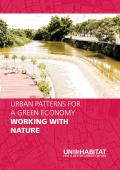
Part of a series of four entitled Urban Patterns for a Green Economy, this guide (Working with Nature) focuses on the effect of unplanned, rapid growth of cities on the functioning of a city-region's natural systems. It outlines how guided development can maximise the ability of ecosystems to support sustainable human and natural processes. It offers a perspective on how to work with nature and the ecological processes in regions, and looks at the need to work across scales; to understand regional systems; and develop principles and measures that can be applied at the regional, city and local scales.
This guide includes case studies from Dar es Salaam City, New York City, Seoul, Hangzhou, Berlin, Cape Town, Nueva Vizcaya, and Zagreb.
The concept of green growth implies that a wide range of developmental objectives, such as job creation, economic prosperity and poverty alleviation, can be easily reconciled with environmental sustainability. This article, however, argues that rather than being win–win, green growth is similar to most types of policy reforms that advocate the acceptance of short-term adjustment costs in the expectation of long-term gains. In particular, green growth policies often encourage developing countries to redesign their national strategies in ways that might be inconsistent with natural comparative advantages and past investments.
This monograph presents a critical review of carbon trading in Africa. It comprises a compendium of essays by an expert group of authors, each analysing key issues from a corruption and governance perspective. The chapters include a discussion on the context of and trends in the carbon market in Africa, offset projects in Uganda, Ethiopia and South Africa, carbon finance and regulation. The authors explore issues around transparency and accountability, and examine the integrity of systems and processes aimed at achieving professed goals of climate change mitigation and sustainable development. While deficits in transparency and accountability do not necessarily constitute corruption, they are nevertheless seen as cause for concern as they provide opportunities for corrupt activities to take place. In general, corruption is approached in a nuanced way because carbon trading provides new and different ways of profiting illegitimately at the expense of a deteriorating climate. For this reason, the study adopts a broad definition of corruption, sometimes using it to indicate a particular or singular abuse, and sometimes to refer to systemic challenges.
Recognising the importance of the financial sector’s incorporation in the transformation process towards green economies, GIZ Financial Systems Development has introduced new advisory services for policymakers and financial intermediaries in the recent past, and has developed specific products and instruments to smooth the way for green growth and suitable climate change adaptation. Current activities focus on the promotion of green financial sector regulation, the build-up of capacities in financial institutions as well as the introduction of innovative financing concepts to increase the flow of funds into green investments, and the development of weather and agricultural insurance solutions.
This paper offers a snapshot of GIZ’s activities. The paper includes case studies from Tajikistan and Ghana.
The process of urbanisation is advancing rapidly. Towns and cities are now responsible for almost four fifths of global GDP; their share in global resource consumption and CO2 emissions is of a similar order. Cities play a leading role in the transformation from consumptive to eco-efficient societies – in short, to a “green economy”. All actors, private and public need to ensure that economic activities contribute to sustainable development. A sustainable economy is not only economically sensible, but also ecologically indispensable. All responsible institutions have to ensure the creation of enabling frameworks for actors in such a way that the “common goods” are protected and that the long-term conditions for living and economic activity are secured.