As the global population heads toward 9 billion by 2050, decisions made today will lock countries into growth patterns that may or may not be sustainable in the future. Care must be taken to ensure that cities and roads, factories and farms are designed, managed, and regulated as efficiently as possible to wisely use natural resources while supporting the robust growth developing countries still need. Economic development during the next two decades cannot mirror the previous two: poverty reduction remains urgent but growth and equity can be pursued without relying on policies and practices that foul the air, water, and land.
The report discusses two crucial questions: How do “green” and “growth” hang together in practice? How will green environmental policies affect GDP growth, employment, and international competitiveness?
The report’s overarching finding is that policies to increase energy efficiency have substantial potential for green growth. A successful green growth policy will require South Africa to have solid, well-thought, and distinct policy agendas if it is to better pursue its growth and environmental objectives. While green policies can have large synergies and co-benefits with the growth and employment agendas, they are no substitute for it.
This report evaluates the requirements for an assessment of climate change impacts on agriculture to guide policy makers on investment priorities and phasing. Because agriculture is vital for national food security and is a strong contributor to Brazil's GDP growth, there is growing concern that Brazilian agriculture is increasingly vulnerable to climate variability and change. To meet national development, food security, climate adaptation and mitigation, and trade goals over the next several decades, Brazil will need to significantly increase per area productivity of food and pasture systems while simultaneously reducing deforestation, rehabilitating millions of hectares of degraded land, and adapting to climate change. There is inadequate data to accurately model projected climate challenges facing Brazil. The report concludes that key integrated and linked interventions are needed in the short term to significantly improve currently available assessments of climate change impact on Brazilian agriculture and to guide policy makers with the priorities and phasing of needed investments.
The 2012 United Nations Conference on Sustainable Development (UNCSD), or “Rio+20 Summit”, confirmed that if countries, communities and businesses are seriously committed to moving towards a green economy to achieve sustainable development and poverty eradication, then they should consider establishing new measures and metrics that not only reflect these goals, but also inspire action.
Green economy indicators are useful tools for informing policy decisions. They also provide a mirror on the journey to an environmentally stable, economically sound and equitable society. That said, there is no single destination on this journey. There are many pathways depending on a country’s endowments, priorities and policies. This publication intends to foster a better understanding and utilisation of green economy indicators. “Measuring Progress Towards a Green Economy” is a practical guidebook that looks at how indicators can be used in a way that specifically supports and tracks green economy policies.
Enhancing energy efficiency and increasing the use of renewable energy constitute essential components of global policies to achieve the Millennium Development Goals. UNIDO recognises sustainable energy as both a precondition and catalyst for economic and social development. This has been a priority in UNIDO’s work for many years. UNIDO’s ultimate aim is to strengthen opportunities for reliable, efficient and affordable energy services, both to urban and rural populations. The organisation takes a holistic approach to energy issues by addressing both supply and demand sides, and by advocating policies aimed at implementing green energy strategies.
This new report reveals, for the first time, data on resource use and resource efficiency for all countries of the world over three decades, from 1980 – 2008. The data covers the global, continental and country level, featuring illustrative case studies. The report evaluates the performances of different countries, highlighting the critical issues of current trends in resource use.
The report addresses three main issues:
1. Patterns of material extraction, trade, consumption and resource productivity in different world regions and countries;
2. Connections between material use and indicators of economic and social development;
3. Links between material use and selected major environmental problems, such as carbon emissions, land use change and water use.
This paper outlines a conceptual and policy approach to bringing social concerns to the forefront of green economy and sustainable development debates. It examines a wide range of social problems and other issues associated with green economy, reasserting that any development transformation must be both green and fair; leading to a green society not just a green economy. However, different transition pathways exist, each with different developmental implications. This paper addresses the key role of social policy, agency and participation in crafting transition paths that are green and fair. A comprehensive or transformative social policy is argued to play a key role in mitigating unfair consequences, influencing behaviour and transforming patterns of inequality. This paper concludes by highlighting issues of fragmentation associated with knowledge, institutional arrangements and socil agency, and suggests the need for 'joined-up analysis, policy and action'.
This summary was prepared by Eldis.
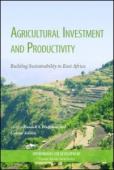
This book provides a deep and systematic look at the opportunities for and constraints to investments in sustainable agriculture in East Africa, offering important insights into what works and how to analyse agricultural investments in one of the poorest regions of the world.
The book critically examines the reasons behind East Africa's stagnant agricultural productivity over the past forty-five years, using the primary lens of investments in fertilisers, seeds, and sustainable land management technologies. These investment have a tremendous impact on production volume, ultimately affecting the income of millions of families throughout the region.
This book provides case studies on Kenya and Ethiopia.