
Appendices to - Guiding climate compatible development: User-orientated analysis of planning tools and methodologies
Written by the research team of at the Institute for Labor Studies, Ministry of Human Resources and Social Security, China, this study presents both the current situation and potential for green employment in China, as well as results of surveys conducted in eight companies in the power industry. In China, green employment can be defined as work in industries, sectors, enterprises, and positions which have low input, high output, low consumption, low emissions, recyclability and sustainability. The purpose of the study is to make policy recommendations for China’s transition toward green employment.
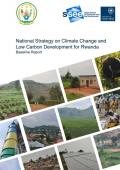
This Baseline Report is the first step in the process of developing a National Strategy on Climate Change and Low Carbon Development for Rwanda. It provides a snapshot of the country today and the planned initiatives that will take it forward, placing it within the context of climate change. Though many opportunities are highlighted, the aim of the report is to provide the foundation for the next step where detailed analysis will take place and recommendations will be made. It includes an analysis of the following sectors: climate policy; economy, trade and industry; energy; mining; transport; cities and the built environment; agriculture; land; water and forestry.
This summary was prepared by Eldis.
Every day, unsustainable patterns of consumption, unsustainable production methods and population growth challenge the resilience of the planet to support human activities. At the same time, inequalities between and within societies remain high leaving billions with unmet basic human needs and a disproportionate vulnerability to global environmental change. To counteract this trend, UNEP and SETAC have worked together to develop the current work Towards a Life Cycle Sustainability Assessment. This has been achieved through the UNEP/SETAC Life Cycle Initiative.
A key objective of the UNEP/SETAC Life Cycle Initiative is to help extend life cycle assessment (LCA) methods and practices. One major achievement has been the development of methods and techniques that can measure sustainability and allow LCA to support decision-making toward more sustainable product and process systems. In this way, life cycle techniques can be used to carry out life cycle sustainability assessments. This guidance document provides a starting point for learning about the methodologies and techniques suitable for life-cycle-based ways of measuring sustainability.
This report was prepared by the UN EMG's Issue Management Group on Green Economy to assess how the United Nations system could coherently support countries in transitioning to a green economy. The report aimes to facilitate a common understanding of the green economy approach and the measures required for the transition. This report was written in the run-up to the 2012 UN Conference on Sustainable Development (Rio+20), where one of the themes was "green economy in the context of sustainable development and poverty eradication".
This report is the first comprehensive study on the emergence of a “green economy” and its impact on the world of work. It includes data that shows a changing pattern of employment in which green jobs are being generated in many sectors and economies around the world as a result of measures to tackle climate change and to reduce emissions of greenhouse gases. This has also led to changing patterns of investment flows into areas such as renewable energy and energy efficiency at the household and industrial level. Within current policy frameworks, only a fraction of the potential benefits for jobs and development is forthcoming.
This report highlights key trends in a growing body of research on the links between climate change and development. The purpose of the review is to pull out the main findings from this body of research to inform policymakers and practitioners who are working towards climate compatible development. It draws on a meta-synthesis of hundreds of policy-relevant research papers published between January 2010 and August 2011, and a closer review of almost 100 of those papers. All the papers chosen for inclusion in the review spoke to two key questions: how does climate change affect development and how can development contribute to climate change adaptation and mitigation? The review focuses on four themes: decision-making in the face of uncertainty; natural resource management in a changing climate; innovative finance for climate action; and technology transfer and division of effort for the low carbon transition.
This summary was prepared by Eldis.
This guide is aimed primarily at national planners and policy advisors in developing countries, focusing on the role of economic tools in planning for green growth. Some of the questions explored by the guide include: How do decision makers create a vision and strategy for green growth? What skills do planners need to work effectively with the range of green growth tools available? And how to assess which tools are right for them?
The Guide concludes that green growth planning needs to be an iterative process, adapting to local developments over time and responding to the needs of national and local stakeholders. Planners rarely find the process straightforward and rely on economic principles and tools to inform the process. However, conventional tools may not address environmental and social dimensions adequately or look beyond economic metrics. New tools and methods have emerged and existing ones have also evolved. Opening up these tools so that they’re more than a ‘black box’ and using them to obtain stakeholders’ buy-in remain key challenges.
This paper describes how Africa’s wind energy markets have evolved over the years and the structural characteristics affecting the development of wind energy projects on the continent; providing what we believe is the first mapping of the continent’s wind energy market. Results from an analysis of 94 projects on the continent suggest that wind energy markets remain small, concentrated and nascent in nature. While an increasing trend in the number and size of projects being implemented has been observed, the papers shows that wind energy contribution to the energy mix in Africa will remain unchanged over the long term. A key observation in the paper is that wind energy has limited potential to address the issue of access to electricity in Africa mainly due to the intermittent nature of electricity output from wind power plants.