
The Green Growth Knowledge Platform (GGKP) Expert Working Group on Natural Capital was launched in November 2017 with the triple objective of advancing the state of knowledge on natural capital valuation for green growth, mainstreaming natural capital in green growth activities, and supporting stronger implementation of policies for natural capital.
At its inaugural workshop, the group identified some fifteen knowledge gaps across the natural capital landscape and then split into sub-groups to hone in on key knowledge gaps in Metrics & Data; Policy; Infrastructure; Finance; and Success Stories.
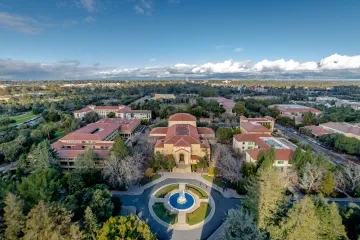
On 22 March 2018, the Metrics & Data sub-group held a workshop at the 2018 Natural Capital Symposium, which took place from 19-22 March 2018 at Stanford University. This workshop served as the first meeting of the group.
Metrics & Data Workshop at Stanford University
Part 1 – Defining critical data needs and methodologies
What are existing use cases for natural capital? What makes a good use case for natural capital? These questions were the focus of Session 1, Defining the use cases: what do we need to measure?
Experts presented a range of concrete use cases, including information on what the use case aimed to achieve, what metrics and data it used, and where metrics and data gaps existed. Use cases included natural capital assessment in the coastal tourism industry in the Philippines, sustainable investment in southern Tanzania, Mongolia’s Sustainable Cashmere Project, a private sector case study where a water utilities company sought to understand its impacts and dependencies on natural capital, and Mozambique’s efforts to value and account for natural capital in two northern provinces pending major new natural gas infrastructure development (more information in GGKP webinar, Bringing Natural Capital into National Green Growth Policy: Lessons from Africa).
A good use case was determined to be a case that demonstrates high impact potential, a clear impact pathway, committed stakeholders and scalability, and has a clear, convincing and widely-communicated narrative of how the incorporation of natural capital into policy, fiscal, and financial decision-making can make an impact.
Once use cases had been reviewed and the characteristics of exemplary use cases had been identified, the group moved on to discuss available methodologies for natural capital assessments and accounting in Session 2, Identifying the methods: how will we do the measurement?
Three methodologies were presented: the System of Environmental-Economic Accounting (SEEA) – a statistical framework that integrates national statistics according to common definitions, classifications, and concepts aligned with the System of National Accounts; predictive spatial modelling using InVEST and other Natural Capital Project tools – an approach that can be used to project changes in ecosystem service benefits, prioritize investment in natural capital, and understand equity implications across beneficiaries; and The Economics of Ecosystem Services (TEEB) approach to valuing ecosystem services, which includes both monetary and non-monetary valuation.
Part 2 – Evaluating big data and data platforms
The GGKP Metrics & Data sub-group merged with the Stanford Natural Capital Project remote sensing group for roundtable discussions on matching data needs to remote sensing solutions in Session 1, Mapping metrics methodologies and data solutions to use cases.
One discussion focused on the specific data needs of the SEEA-EEA framework and how these could be served by earth observation data sources. A strong need was identified for the Natural Capital Project or a related remote sensing group to create a consolidated list of observables that could be confidently measured at specified scales.
In Session 2, Identifying data layers: Remote sensing data for natural capital, four cutting-edge data platforms for natural capital were presented: the UN Biodiversity Lab (formerly the UNDP Biodiversity Data Sandbox), which brings together spatial data from NASA, the UN Environment World Conservation Monitoring Centre (UNEP-WCMC), the Global Resource Information Database in Geneva (GRID-Geneva), UN agencies and research institutions to bring spatial data into the Sixth National Reporting Cycle of the Convention on Biological Diversity; the UNDP Biodiversity Finance Initiative (BIOFIN) – a global partnership that engages in national review processes to help countries improve biodiversity policies and financing in accordance with national targets; and the World Resource Institute’s Global Forest Watch, Aqueduct, and Resource Watch – interactive digital forest, water, and resource mapping, monitoring and risk assessment systems, respectively.
Part 3 – Determining a collective approach
During the final session, participants discussed the working group’s next steps around metrics and data, based on where they felt the GGKP could best add value. Options include but are not limited to a systematic review or inventory of global data platforms for better understanding their performance, overlap, and needs; an assessment of the strengths and weaknesses of various natural capital models and tools; the production of guidelines or standards for vetting or curating natural capital studies; or contribution to an integrated modelling framework for natural capital including both policy and finance elements, building for example on the BIOFIN process.
On the basis of this discussion and various follow-up meetings, the GGKP Secretariat and the group’s Co-chairs are developing a set of activities. The results of this process will be shared with the working group by the summer of 2018. The first deliverables are expected to be shared and discussed at the Sixth GGKP Annual Conference at the OECD in Paris on 29 November 2018.
***
About the GGKP Natural Capital Expert Working Group
The GGKP Natural Capital Expert Working Group explores state-of-the-art methods, models, data and tools to achieve its three goals of pushing forward the knowledge frontier around natural capital and green growth; mainstreaming natural capital in global green growth activities; and supporting stronger implementation of natural capital commitments in national economic plans. The group is comprised of over 20 experts from across GGKP’s partner institutions and beyond, each bringing many years of experience working on natural capital approaches.
For more information, please see About the Natural Capital Expert Working Group.
Why Natural Capital?
A number of countries have taken up green economy or green growth action plans in recent years, but only a handful have included significant considerations of the role of natural capital in those plans. Given the critical role that natural capital stocks and ecosystem services play in maintaining biodiversity and enabling green growth, bringing natural capital into national development action plans now and into the future, will help make an important contribution to achieving the Sustainable Development Goals by 2030.
For the latest resources, data, policy guidance and expert insight on natural capital, visit the GGKP theme page on Natural Capital.
Economics for Nature
The GGKP is a partner in the Economics for Nature programme, an initiative focused on ensuring that nature has a voice in economic policy and planning processes. The GGKP is a leading partner together with the Green Economy Coalition (GEC), Finance Watch, the Natural Capital Coalition and WWF France.
The MAVA Foundation, a Swiss-based philanthropic organization, has committed to supporting the Economics for Nature programme for six years. MAVA has made the mainstreaming of natural capital into national development plans a key focus of its strategic programme for 2017-2022.
For more information, please visit the Economics for Nature webpage.