
Tuesday, March 08, 2022 - It’s sunny in the conference room with old wooden floors in Nukus. This city was once the capital of the abundant river delta region south of the Aral Sea. Now the capital lies in a dry desert landscape and the almost 2 million inhabitants of this autonomous region, Karakalpakstan, have been adapting to a lack of water for decades. The evaluation specialist from Seoul asks a female farmer from Bozatau district, sitting opposite her, “why would her husband be unwilling for her to work for the village council?" The other farmers burst out in laughter, and the woman replies, chuckling, “If you’re asking that, then how can I even start to explain!”
Women’s participation in local, regional, national, and global decision-making is key to reducing the severity of the climate crisis. Yet many women participating in various focus groups in Nukus emphasized that ‘they can do anything men can’, but that ‘they don’t want to’. The leaders of ‘mahallas’, village councils, hold gatherings and visit other families to resolve community feuds after dark when everyone is at home after school and work. That is where some husbands’ ‘unwillingness’ comes in, as many local men would like ‘their wives' to stay at home after daylight hours. Entirely aside from that, many women expressed that they were not interested in solving 'other people’s problems’ and were glad not to have such a time-consuming role. So, how can we increase their participation and leadership in the face of such diverse hurdles?
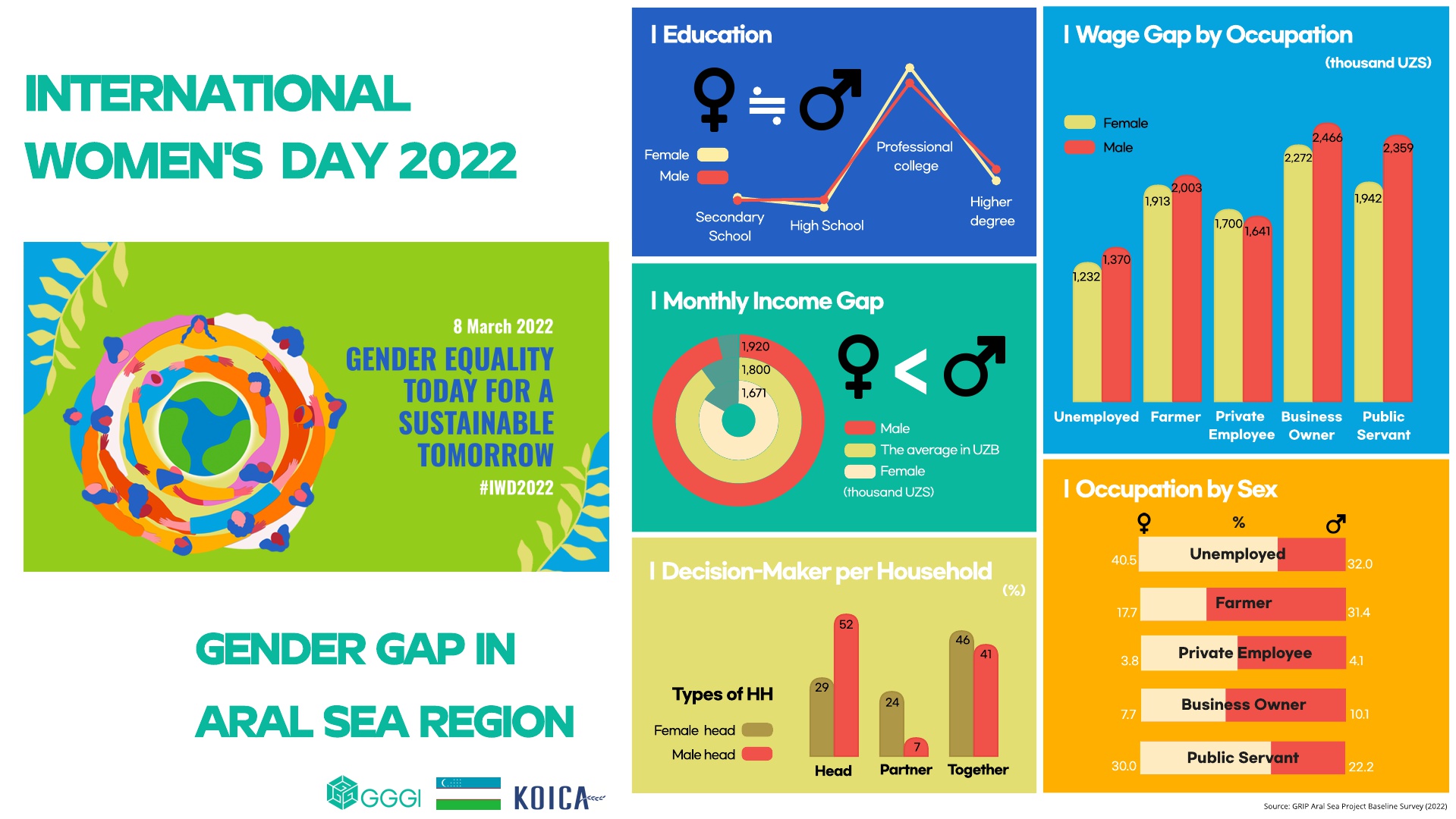
There is no meaningful difference in the education levels of women and men in our four project regions in Karakalpakstan, but the disparity in terms of wages is significant. The gender pay gap exacerbates the disadvantaged roles that women have in society. Women’s economic empowerment can make powerful changes in various aspects. By empowering women, we can improve children’s education levels, entire families’ nutrition, and thereby health, and can give both women and men more space and time to care about their neighbours, communities, and environment. Changing the environmental status quo requires that energy and time. How can we economically empower women while ensuring environmental sustainability in Karakalpakstan?
Farming is key. The Aral Sea GRIP project (Green Rehabilitation Investment Project for Karakalpakstan Republic to Address the Impacts of the Aral Sea Crisis) is GGGI’s first project in Central Asia and is financed by KOICA. This project works with local farmers and micro, small and medium entrepreneurs in the four districts Bozatau, Chimbay, Karauzyak, and Kegeyli to develop their knowledge of ecologically sustainable farming methods and to improve their access to relevant green financing and services. Our project engages local women in all project interventions. We are conducting a gender-sensitive green employment assessment to boost green jobs in the region. We are also designing capacity development curriculums tailor-made for local women and youth in the agriculture sector. The project specifically targets 50% female participants in most capacity development programs, which means that we will reach the majority of female dekhan(small hold) farmers, as they constitute about 20% of all dekhan farmers. Gender-focused targeting is essential to increasing women’s participation in inclusive climate change adaptation actions.
Kegeyli, one of our partner districts, is named after a type of tree that has almost died out in this region, due to the lack of water. Yet Kegeyli also means “let’s go”! Let’s take that call to heart to achieve gender equality today for a sustainable tomorrow!
Written by: Nora Heinonen, Senior Associate - Social and Gender Inclusive Climate-Resilient, GGGI Uzbekistan
Source: UN Women (2022) IWD Media Kit.
Read more about the Aral Sea GRIP project here and GGGI’s work in Uzbekistan here.