
The paper explains why transformative adaptation is needed in cropping systems, how seeds systems play a key role in these systemic shifts, and what changes are needed in crop research and development to enable climate-resilient transformations. The paper concludes by providing recommendations for researchers, policymakers, and adaptation funding entities.
This paper sets out the context and findings of the dialogue discussions, and proposes a working federalism framework to delineate roles within a future federal climate policy.
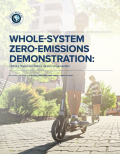
This report introduces a new concept — Whole-System Zero-Emissions Demonstration (WS-ZED). The WS-ZED concept goes one step further than net-zero carbon and proposes a broader concept to reveal the added value of synergy among net-zero carbon, net-zero waste, and net-zero pollution. This new concept aims to resolve these growth challenges by adopting a holistic approach to put in place urban management policies to combat both climate change and environmental degradation.
This report introduces the role of climate and energy-economic scenarios in informing climate-aligned policy and strategy.
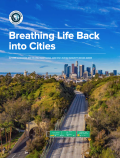
For a few weeks in March and April 2020, the COVID-19 lockdown brought about an unexpected side effect: dramatically cleaner air and endless vistas unlike anything cities have experienced in living memory. As 2020 progressed, the pandemic, the economic downturn, and a growing reckoning with racial injustice in the United States converged to place economic, social, and public health strains on local governments. Efforts are now underway by these governments to help their communities recover. As they do so, there is an opportunity to implement local changes that can deliver multiple community benefits while also helping to accelerate recoveries. There is an opportunity to build back better.
Air quality and equity are highly interconnected issues. And there are actions cities can take to help address them both simultaneously.