
Browse Research

Sort by
UNCTAD_image.png
United Nations Conference on Trade and Development (UNCTAD)
The purpose of this handbook is to serve a more practical purpose and assist countries in their efforts to find positive synergies and complementarity between Access and Benefit Sharing (ABS) and BioTrade.
EKLIPSE_image.png
Organisation :
European Commission (EC)
EKLIPSE project is intended to help build up an evidence and knowledge base on the benefits and challenges of applying Nature-Based Solutions (NBS). This document reports on these three objectives. It is intended to be used as a reference document by members of current and future European projects with an interest in NBS in urban areas, and by practitioners seeking to compare the effectiveness of NBS design, implementation and evaluation.
Natural Capital Forum_image.png
World Bank Group
This is a report of the proceedings and highlights of the 4th Forum on Natural Capital Accounting for Better Policy Decisions held 18-19 November 2019 in Kampala, Uganda. The 2019 NCA Policy Forum, co-organized by the World Bank, United Nations Statistics Division (UNSD), the Government of Netherlands, and the Government of Uganda, brought together over 100 high-level participants including government representatives from developing and developed countries, as well as from organizations working on NCA, environmental-economic policy, and sustainable landscape management. This year's theme was Measuring and valuing natural capital for improved landscape management.
Linking accounts for ecosystem services and benefits to the economy through bridging (LISBETH).png
Organisation :
European Commission (EC)
The acronym LISBETH stands for LInking accounts for ecosystem Services and Benefits to the Economy THrough bridging. This report expands on the concept of LISBETH, which is based on INCA (Integrated system for Natural Capital Accounting) and provides three practical examples to explain its application.
WWF_report.png
Organisation :
World Wide Fund For Nature (WWF)

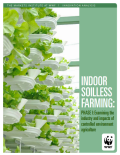
This Innovation Analysis from The Markets Institute at WWF examines the environmental impact of various systems of indoor soilless farming. These systems include hydroponics, aquaponics, and aeroponics in greenhouse and vertical settings.

Soilless vertical and indoor urban farming is a growing niche industry that aims to reduce many of the environmental impacts of conventional agriculture. At scale, this method of farming could decrease pressures on land, biodiversity, natural habitat, and climate. However, the industry also faces hurdles that prevent it from moving beyond its current specialisation. This analysis looks at how we might address some of these challenges and help bring these systems to scale. 

Through Phase 1, this report explores the possibility of boosting the domestic - and eventually global - indoor soilless farming industry by leveraging stranded assets and building a robust coalition of local partners to launch a pilot farming system. Phase I activities included: