The El Niño event in 2015/2016 was one of the strongest since at least 1950. Drought during the event amplified disruption to public water supply in Botswana’s capital and contributed to unprecedented hydroelectric load shedding across Zambia. In Kenya, moderate precipitation during the El Niño brought localized floods to Nairobi and other areas. Yet, during the 2015/2016 El Niño, fluctuations in precipitation were not extreme considering the strength of the El Niño event. Results, therefore, highlight that even fairly moderate precipitation anomalies can contribute to major disruption to economic activity.
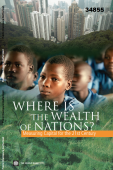
The book presents estimates of total wealth for nearly 120 countries, using economic theory to decompose the wealth of a nation into its component pieces: produced capital, natural resources and human resources. The wealth estimates aims to provide a unique opportunity to look at economic management from a broader and comprehensive perspective. The book's basic tenet is that economic development can be conceived as a process of portfolio management, so that sustainability becomes an integral part of economic policy making. The rigorous analysis, presented in accessible format, tackles issues such as growth, development and equity. This publication is organized in four sections. The first part introduces the wealth estimates and highlights the main facts on the level and composition of wealth across countries. The second part analyzes changes in wealth and how they matter for economic policy. The third part deals with the level of wealth, its composition and links to growth and inequality. The fourth part reviews existing applications of resource and environmental accounting.