
Online, Face-to-face

Greenpreneurs is a global network of youth competing to take their green growth solution from idea to business plan. Greenpreneurs harnesses the creativity and ambition of youth to develop the green growth solutions that promote sustainability as a socio-economic enabler and contribute to achieving the Sustainable Development Goals.
Online

The United Nations Economic and Social Commission for Asia and the Pacific (UN ESCAP) is offering an e-learning course titled Low Carbon Green Growth Roadmap, which addresses the economic transformation necessary for the realization of the Green Growth objectives.
Online

The United Nations Statistics Division is hosting a self-paced introductory course titled "System of Environmental Economic Accounting (SEEA)", which provides an introduction to the SEEA Central Framework, the statistical standard to measure the relationship between the economy and the environment.
Online

The United Nations Statistics Division is offering a self-paced course titled "SEEA - In Depth Training on Water Accounting". The course provides an overview of water accounting as laid out in the System of Environmental Economic Accounting (SEEA), the statistical standard used to measure the relationship between the economy and the environment, and the SEEA Water.
Online
The United Nations Statistics Division is hosting a self-paced course titled "SEEA - Experimental Ecosystem Accounting". The course provides an overview of ecosystem accounting including details on, among others, spatial units, ecosystem services, ecosystem condition and biodiversity accounts.
Online
The United Nations Statistics Division is offering a self-paced course titled "SEEA - In Depth Training on Energy Accounting" on the organisation's online e-learning platform. The course provides an overview of Energy in the System of Environmental Economic Accounting (SEEA).
Online

Cities are quickly becoming the world’s center for business and commerce, accounting for over 80% of the world’s economic activity, but also contributing to two-thirds of the world’s overall energy consumption, and about 70% of global greenhouse gas (GHG) emissions.
Online

Registration is now open for the March - August 2019 session of the Certified Expert in Climate & Renewable Energy Finance e-course offered by the Frankfurt School - UNEP Collaborating Center. This course will help participants gain an understanding of available policy instruments that can trigger green investment at the required scale, and the perspective of investors or financiers confronted with risks and regulations of renewable energy or energy efficiency projects.
Online
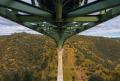
Registration is now open for the March - August 2019 session of the Certified Expert in Climate Adaptation Finance e-course offered by the Frankfurt School - UNEP Collaborating Center. This course will help you to understand the many facets of, and perspectives on, climate adaptation finance – which is not and shall not be limited to grant funding. An overview of how financing typically takes place in different adaptation related projects will form the basis for discussions about why finance is flowing towards adaptation projects in some cases whereas in other situations commercial adaptation investment is inhibited.
Online
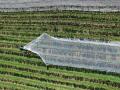
In this course, learn about food security worldwide, the effects of malnutrition, how we manage ecosystems that provide food resources and more. You’ll emerge from this course with a clear answer to the question: What can I do to make food consumption and production more sustainable?