

The master's degree "Green Economy" seeks to provide the scientific understanding on which the transition to a green economy can be based, including the principles of environmental sustainability and the societal responses required to implement these in practice.
Core units delivered are: Biodiversity and ecosystem services, carbon management, environmental law...
In recent decades there has been increasing global concern about the sustainability of the use of fossil fuels and nuclear power, which has led to increased interest in more sustainable renewable energy sources. These ‘renewables’ have been utilised for centuries, in water mills, windmills and wood stoves. But in recent...

This course covers the basic definitions and history of sustainable development and sustainability in business - from a niche interest to the present day.
We’ll explore the key drivers to sustainability: the use of standards; the importance of stakeholder engagement; governance (including the use of codes of conduct); innovation for...
This course takes a multidisciplinary approach, to examine the energy transition question from each of these perspectives. It starts by introducing global energy and sustainability issues, and possible scenarios in the first week. To facilitate and realise changes in energy systems, technology and innovation plays an important role. This will...

This course explores the Circular Economy: how businesses can create value by reusing and recycling products, how designers can come up with amazingly clever solutions, and how individuals can contribute to make the Circular Economy happen. Participants learn to re-think the economic system, and act upon it. The course is...
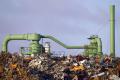
This course provides an overview of the municipal solid waste management situation in developing countries covering key elements of the waste management system, with its technical, environmental, social, financial and institutional aspects. Participants learn about appropriate and already applied solutions through selected case studies. The course also covers strategic planning...

This course is designed to introduce participants to the issues of energy in the 21st century – including food and fuels – which are inseparably linked – and will discuss energy production and utilization from the biology, engineering, economics, climate science, and social science perspectives.
This course covers the current...
Energy issues have always been important in international relations, but in recent years may have become even more important than in the past due to the widespread awareness of existing limits to energy sources and negative climate impacts. The course discusses global trends in energy consumption and production, various available...
Environmental law may be the one institution standing between us and planetary exhaustion. It is also an institution that needs to be reconciled with human liberty and economic aspirations. This course considers these issues and provides a tour through existing legal regimes governing pollution, water law, endangered species, toxic substances...

This course investigates and explores the challenges related to metals supply, both scarcity and environmental impacts, and the conditions and consequences of a circular economy for metals. The course was prepared in collaboration with Leiden University, Netherlands and is based on the reports of the Global Metals Flows Working Group...