

On the 23th and 24th of June 2023, the Digital Enabling of Circularity, Innovation, Development and Environment (DECIDE) project team from the UN Environment Programme and ETH Zurich challenged hackers at the UPU Hackathon to build data-driven solutions for reducing plastic pollution linked with e-commerce.
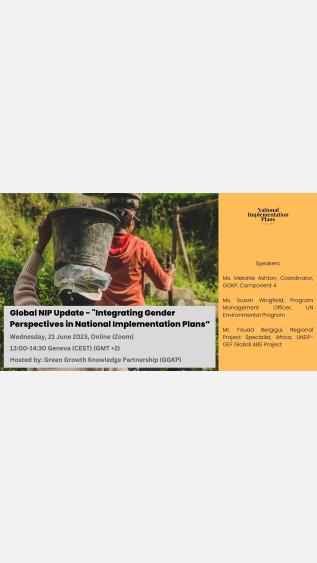
On 21 June 2023, the Green Growth Knowledge Partnership (GGKP) hosted a webinar to provide participants with an overall understanding of gender in chemicals management, and the importance of strategies for incorporating the gender dimension into national implementation plans under the Stockholm Convention on Persistent Organic Pollutants.

On 21 June 2023, WWF is hosting an event where participants can learn from experts on biodiversity standards and frameworks, and meet the pioneer companies that have piloted these new tools and frameworks.

On 5 July 2023 at 2:00 pm (CEST) the Green Growth Knowledge Partnership (GGKP) and the Donor Committee for Enterprise Development (DCED) jointly hosted the webinar "Navigating Green Private Sector Development" to introduce innovative green private sector developm

On 19 June 2023, the International Chemical Secretariat is hosting a webinar to discuss the challenges and possibilities in developing safer PFAS alternatives.
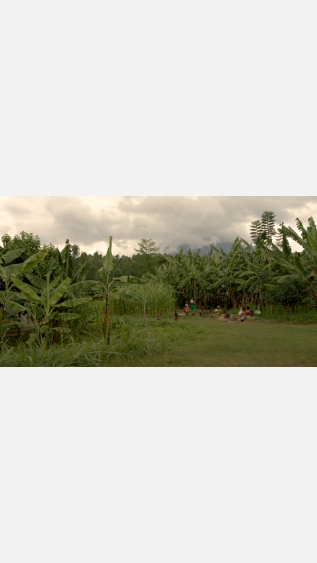
A team from UNEP and UNITAR visited Rwanda in May 2022 to document the impact of the joint UNDP‒UNEP Poverty-Environment Action for Sustainable Development Goals (2018-2022) project and learn how Rwanda’s efforts to achieve sustainable development would be sustained after 2022. We examined how Rwanda‘s “Green Village” projects address poverty-related environmental problems such as soil erosion, inadequate access to water, deforestation and unsustainable land use and clean energy. The National Climate and Environment Fund (FONERWA) helped provide sustainable financing of poverty-environment linkages at the national and local level and turbocharged the Green Villages, which evolved to become “Integrated Development Project Model Villages”. The interventions have enabled their communities to increase livelihoods, improve food security, protect natural resources , advance gender equality and enable children, particularly girls, to attend school.