
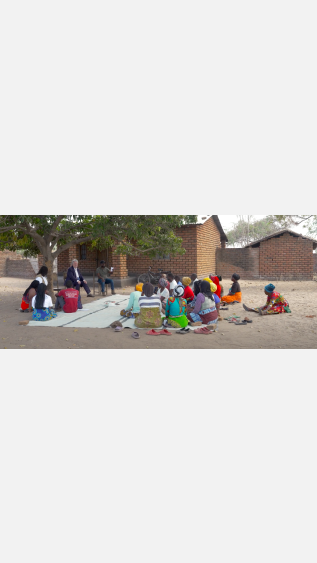
Poverty-Environment Action Malawi has fostered integration of environmental sustainability and climate objectives in development planning, budgeting and monitoring systems; and incentivized shifts in public and private investments towards environmental sustainability and climate objectives for poverty eradication. During a visit to Malawi undertaken in October 2022, organized by United Nations Institute for Training and Research (UNITAR), UNDP Malawi introduced our team to the main tools used to build support for Poverty-Environment Action, with a special focus on agricultural and gender reforms. Three seminal reports and policy briefs developed through the Poverty-Environment Action Malawi – the Climate Smart Aquaculture Toolkit, Soil Loss Mitigation Action Plan and Strategy and the companion Policy Brief, Route to Sustainable Land Management in Malawi: Soil Conservation and Restoration – highlight opportunities for addressing aquaculture and soil and nutrient losses issues in Malawi. The Cost-Benefit Analysis of the ADAPT PLAN report and policy brief demonstrate the efficiency and impact of various climate adaptation interventions on community livelihoods, environment and natural resources. The findings of the report helped build the case for strengthening support for women-led cooperatives in Malawi.

The Government of Lao PDR’s efforts to prioritize investments in natural resource sectors has aided poverty reduction, yet present significant risks of environmental degradation and loss of natural resources. Unregulated investing has led to cases of village displacement, land grabbing or segregation of resources vital to the livelihood of inhabitants. At the invitation of the Government of Lao PDR, the joint UNDP‒UNEP Poverty-Environment Initiative (PEI) supported the government in developing tools to guide screening, approval, monitoring and compliance enforcement of investments. PEI further helped build the capacity of institutions to engage with impacted communities and recognize unintended social and environmental impacts of investments in key natural resource sectors. The joint UNDP‒UNEP project, Poverty-Environment Action for Sustainable Development Goals (Poverty-Environment Action) aimed to strengthen coordination of government’s regulatory capacity to coordinate and promote higher quality investment to contribute to the Sustainable Development Goals. The practices pioneered by PEI and Poverty-Environment Action and adopted by the Government of Lao PDR bring the promise of all three dimensions of sustainable development – economic, social and environmental – closer to achievement.
On 16 June 2023, UNDP Financial Centres for Sustainability (FC4S), IFD and NatureFinance are hosting a webinar that focuses on understanding biodiversity credit markets and a nature-finance alignment tool.

Markets are strong and their language is well understood – money does talk. But maybe we need to make people talk and money listen. Takeaway from the 2023 World Circular Economy Forum, hosted by Sitra and other partners, and bringing together thousands of professionals on the topic of circularity – and how to achieve this seemingly distant and yet urgent goal in our economies.
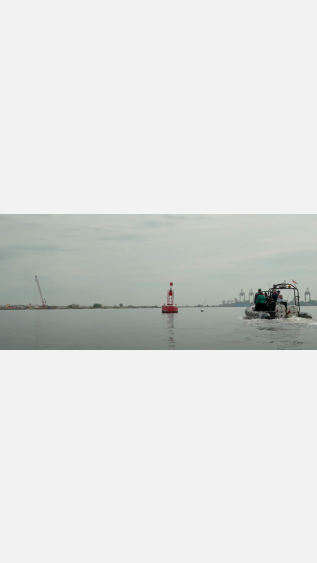
On a breezy morning in late November 2022, a team from UNEP and UNITAR set out in Coast Guard pontoon boats to view up close installations of solar photovoltaic buoys and lighthouses which serve to safely guide navigation in Jakarta Bay. The solar installations are part of the effort to put the country on the path to decarbonisation and meet commitments set in Indonesia‘s Enhanced Nationally Determined Contribution, in fulfilment of the Sustainable Development Goals. The joint project UNDP‒UNEP Poverty-Environment Initiative (PEI) supported government efforts to develop and implement tools to support measures which qualify for Green Bond/Green Sukuk (Islamic Bond) investments. A Green Sukuk issuance in 2019 funded the Double Track Railway Project in North Java Line Double track railway, making transportation in and out of the Capital more sustainable. Through the Sustainable Development Finance Project, Poverty-Environment Action, the successor to PEI, continued to support the country‘s Green Sukuk initiatives by building capacity among Government officials to employ climate and gender-sensitive budgeting and investment.
Asia-Pacific countries have increasingly adopted policy measures designed to fulfil their climate pledges under the Paris Agreement.