
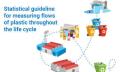
This document provides practical guidance to statistical offices and other relevant institutions to produce high-quality, internationally comparable statistics on plastics.
This guidance document provides a standardized approach to developing inventories of polychlorinated biphenyls (PCBs) and conducting analysis for their identification and quantification.
This guidance offers practical, experience‑based procedures to support stakeholders in safely managing, handling, transporting, storing and disposing of PCB‑containing liquids and PCB-contaminated equipment.
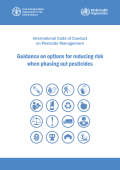
This guidance provides a practical roadmap for governments and stakeholders, particularly in low- and middle-income countries, to manage pesticide withdrawal, cancellation, or voluntary removal.
This document provides guidance for inspectors and regulatory authorities on best practices for identifying and tackling illegal pesticides throughout the complete lifecycle of a pesticide.
The Global Circularity Protocol for Businessthe offers a comprehensive approach to integrating circularity into strategy, operations and performance management.
This manual provides an overview of the Stockholm Convention on Persistent Organic Pollutants, outlining key legal obligations and the preconditions for effective implementation.
This roadmap toolkit offers a clear, step-by-step methodology to help governments plan, engage stakeholders and assess their economic systems to identify circularity opportunities.
This guide provides cities with practical tools, insights and case studies to use procurement as a catalyst for the circular economy.
This document is intended for city officials, experts and urban planners seeking to build more resilient and sustainable food systems.