Knowledge

Beijing Institute of Finance and Sustainability, Inquiry into the Design of a Sustainable Financial System (UN Environment Inquiry), Global Environment Facility (GEF)

Environmental Disclosure in the Banking Sector of China: Practices and Experience outlines the promising advances China has made in recent years as part of its wider effort to develop a green financial system.
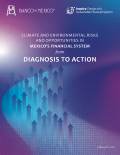
Cover_of_Climate_and_Environmental_Risks_and_Opportunities_in_Mexico's_Financial_System_UNEP_Inquiry
Banco de México, Inquiry into the Design of a Sustainable Financial System (UN Environment Inquiry)
This report discusses the state of Mexico's financial institutions in incorporating environmental and social risks into mainstream risk strategies, and pathways to capitalise on market opportunities that will result from the transition to a low-carbon economy. It provides an analysis and recommendations for financial institutions and regulators.
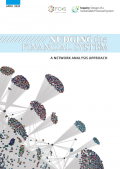
Inquiry into the Design of a Sustainable Financial System (UN Environment Inquiry)
This paper is a first attempt to improve the understanding of the sustainable finance ecosystem, its partnerships, actors and emerging network characteristics related to the implementation of the 2030 Agenda for Sustainable Development and its 17 Sustainable Development Goals (SDGs).
Inquiry into the Design of a Sustainable Financial System (UN Environment Inquiry)
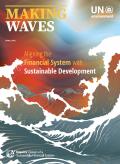
Making Waves: Aligning the Financial System with Sustainable Development is the final, global report of the Inquiry into the Design of a Sustainable Financial System (UN Inquiry). The report reviews the Inquiry’s core analysis, summarizes progress made in aligning the financial system with sustainable development between 2014 and 2017, reflects on the lessons that can be learned from the Inquiry’s approach, and highlights what still needs to be done and what success could look like. It finds real signs that a shift to a sustainable financial system is well under way.
Establishing China’s Green Financial System_Progress Report
The International Institute of Green Finance (IIGF), United Nations Environment Programme (UNEP), Inquiry into the Design of a Sustainable Financial System (UN Environment Inquiry)
The report Establishing China’s Green Financial System: Progress Report finds that China – which put green finance on the G20 agenda during its 2016 presidency – is following through on its political commitment to boost the financing required to do this.
Inquiry into the Design of a Sustainable Financial System (UN Environment Inquiry), Federation of Indian Chambers of Commerce and Industry (FICCI)

An India Advisory Council of the UNEP India Inquiry was convened by the Federation of Indian Chambers of Commerce and Industry (FICCI). This report, Delivering a Sustainable Financial System in India highlights key proposals emerging from their discussions for aligning the Indian financial system with sustainability.

In the Indian context, they call for the development of a more robust and resilient ‘sustainability-oriented market framework’ focused on banking, institutional investment, public finance institutions and foreign direct investment. They called for policy and regulatory innovation in five areas:
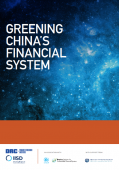
International Institute for Sustainable Development (IISD), Inquiry into the Design of a Sustainable Financial System (UN Environment Inquiry), Development Research Center of the State Council (DRC), People's Republic of China

Over the past 30 years, China has developed rapidly to become the world’s second largest economy, reaching the status of a middle-income country. Realizing this success, however, has involved a development approach entailing massive and inefficient resource use, and extensive damage to the quality of air, water and soil. Transforming from a resource- and pollution-intensive economy to a green economy is now a strategic priority for China. Success depends on the development of green industries and the transformation and reduced importance of many traditional industries. Success will be built heavily on green finance, and this is where China is headed.

The aim of this book is to develop specific proposals for greening China’s financial system, based on an analysis of current practice in China and an exchange of experience with international experts. The book proposes a framework for actions covering five key areas that, if adopted by the Chinese government, would promote the systematic development of green finance:

A. Establish and strengthen legal frameworks, including environmental laws and law enforcement that contribute to the demand for green finance.
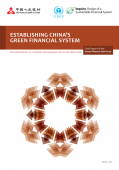
People's Bank of China, Inquiry into the Design of a Sustainable Financial System (UN Environment Inquiry)

China’s central bank, the People’s Bank of China, has launched a ground-breaking report that sets out in specific and practical terms an ambitious agenda of how China can green its rapidly developing financial and capital markets.

The report, entitled “Establishing China’s Green Financial System”, is the outcome of a Green Finance Task Force which was tasked to develop policy, regulatory and market-innovations that would better align China’s financial system with the needs of green industry and sustainable development. The Task Force was co-convened by the Research Bureau of the People’s Bank of China (PBC) and the United Nations Environment Programme project Inquiry into the Design of a Sustainable Financial System (`UNEP Inquiry`).
University of Oxford, Inquiry into the Design of a Sustainable Financial System (UN Environment Inquiry), University of Oxford’s Smith School of Enterprise and the Environment (SSEE)
Over the course of the last two decades, the issues surrounding technological innovation, investor behaviour, and business resilience have become magnified in the context of environmental change. This has helped to bring forward the issue of stranded assets as a sustainability concern beyond regulatory action on competition policy. This paper, produced to help inform an International Institute for Sustainable Development (IISD) and UNEP Inquiry collaboration with policymakers in China, examines the risks and opportunities associated with stranded assets, provides five international case studies, and identifies how these issues might be relevant to Chinese policy makers.