
The IPBES Assessment Report on the Sustainable Use of Wild Species offers insights, analysis and tools to establish more sustainable use of wild species of plants, animals, fungi and algae around the world.
This report provides a global overview of progress on the implementation of the 2030 Agenda for Sustainable Development, using the latest available data and estimates.
This paper seeks to set out a stable and prudent course for macroeconomic policy, arguing that a policy approach that encourages an acceleration in clean investment is best placed to address to the challenges of the current global economic environment.
This report finds that there is a dominant global focus on short-term profits and economic growth, often excluding the consideration of multiple values of nature in policy decisions.
This report highlights the key takeaways for South and South-West Asia in terms of the disaster risk landscape from natural and biological hazards.
This case study presents an overview of initial assessments of the technical potential for offshore wind in the Black Sea. It also identifies policy-related barriers at the national and regional levels and provides a blueprint for policymakers to overcome them.
This guide considers shows how nature-based solutions can be mainstreamed in the portfolio of the Asian Development Bank.
This paper dissects green and polluting jobs in the United States across local labor markets, industries and at the household level.
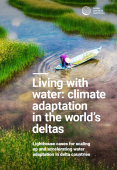
This case study brings together inspiring case studies from around the globe to galvanize governments and citizens to help the half a billion people living in delta communities who are imperiled by climate change.
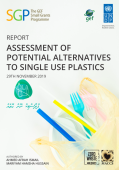
In 2011 the Maldives imposed a 400% import duty on plastics bags and made 'environmentally friendly' plastic bags duty-free. This policy change led to a significant increase in the imports of 'oxo-biodegradable' bags into the market causing even more harm to the environment than regular plastic bags.