
Dumping of lead-acid batteries from cars in Trinidad and Tobago has resulted in children being exposed to lead poisoning. Responding to the situation, the government enacted national legislation, as called for in the Basel Convention, to minimize their generation and ensure their environmentally sound management.
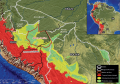
The Madre de Dios (MDD) region of Peru is a biologically and culturally diverse area that forms a key conservation corridor spanning 30 million hectares of protected areas in the Tropical Andes Biodiversity Hotspot, and connecting the Andean foothills with the Amazon. Prior to 2010, the construction of the interoceanic highway began. This road is an important economic corridor that crosses the Andes to connect ports on the Pacific coast with MDD as well as road networks beyond, all the way to São Paulo, Brazil.

Through the enactment of the Finance Act 2019 and issuance of the Green Bond Guidelines by the Capital Markets Authority, the government provided the enabling conditions for the successful issuance of the first sustainable infrastructure funding system that is based on an innovative financing instrument - Green Bonds (GB).
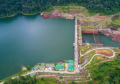
This case study reflects on the unexpected impact of a sustainable infrastructure project in Laos. The NT2 dam, which began operations in 2010, was promoted as a stateof-the-art, poverty-alleviating sustainable dam project for its grounding in extensive social and environmental research and monitoring at all stages of the infrastructure project cycle.
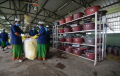
In 2014, 17 administrative wards in Ambikapur were chosen to pilot a new decentralized strategy by setting up Solid Liquid Resource Management (SLRM) centres. The strategy focused on empowering less privileged women through training on a variety of technical and soft skills related to waste management, including how to properly and hygienically dispose of and sort waste.
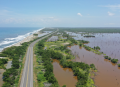
Colombia’s largest marsh ecosystem, the Ciénaga Grande de Santa Marta (CGSM), has experienced substantial erosion since the 1950s, when a highway was constructed along Salamanca Island. The Government of Colombia has proposed to refurbish and expand the highway to make it more resilient to coastal erosion and sea level rise, and to accommodate increased vehicle traffic. The proposal was a conventional “gray” design.
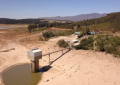
This case study is based on the water resilience approach developed after the historic three-year drought from 2015 to 2018 in Cape Town South Africa. A region that had grown accustomed to water shortages when it came close to what was described as a "day zero" scenario, where water safety would be almost completely compromised.
This report highlights the issues and the opportunities for risk transfer solutions for protecting coral reefs and improving their resilience.
This document It aims to educate tourism stakeholders and provide evidence-based guidance for decision-making to address pollution from single-use plastic products.
The Stockholm Action Agenda is a multi-stakeholder initiative, working to identify practical action priorities that will help businesses around the world transform the sustainability of global value chains much faster and at a bigger scale.