
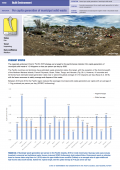
This brief show that reducing per capita waste generation provides financial benefits and greater safety for people and ecosystems.
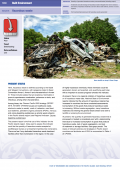
Here, hazardous waste is defined according to the Basel and Waigani Conventions, with categories listed in Basel Convention Annex I, Annex II and characteristics in Annex III. These include wastes that are explosive, flammable or prone to spontaneous combustion, poisonous or toxic, and infectious, among other characteristics.
This assessment provides a detailed view of the legislative environment governing waste management currently in operation in Kiribati.
Online

This online course is designed to equip those with the knowledge and tools required to apply systems thinking to complex food systems challenges in an integrated manner.
The Climate Change Indicators Dashboard is an international statistical initiative to address the growing need for climate-related data used in macroeconomic and financial policy analysis.
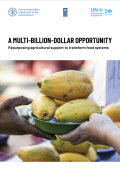
This joint FAO-UNDP-UNEP report calls for governments to rethink the way agriculture is subsidized and the reforms required to better support the transformation of food systems in order to achieve the SDGs.
The SBTi’s Net-Zero Standard provides the guidance and tools companies need to set science-based net-zero targets.

The MPA Outlook, from the Nairobi Convention and the Western Indian Ocean Marine Science Association, documents progress made by countries in the region towards the achievement of Sustainable Development Goal 14.5 and provides lessons and opportunities to increase momentum for achieving post-2020 Global Biodiversity Framework targets.
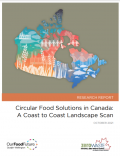
This report identifies, compiles and presents examples of food solutions that are contributing to making Canada’s food system more circular, focusing on examples from particular communities and sets of actions and actors that have not previously been profiled in published resources.
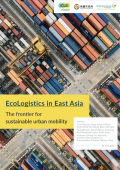
This paper presents case studies and analysis of the mobility and logistics challenges of three East Asian cities.