Browse Knowledge

Sort by
Coalition for Urban Transitions
National governments can spur COVID-19 recovery, achieve shared prosperity and drive climate action through national policies and targeted investments to decarbonise cities and make them more resilient. This report shows the power of urban transformation and the many ways to achieve it by looking up close at six major emerging economies: China, India, Indonesia, Brazil, Mexico and South Africa.
Environmental Defense Fund (EDF)
Resources for the Future (RFF)
Workers and communities that are heavily dependent on fossil fuel economies— including the production of coal, oil, and natural gas—are likely to experience disruptions in the status quo as society addresses climate change through the advancement of clean energy alternatives. This report is the fourth in a series that examines policies and programs to promote fairness for workers and communities in a transition to a low–carbon economy, often referred to as a just transition.
Net Zero Investment Framework - Implementation Guide_IIGCC.JPG
Organisation :
The Institutional Investors Group on Climate Change (IIGCC)

This Net Zero Investment Framework both encourages and raises ambition for the investment community, and supports investors in realising their net zero goals.

Deforestation Fronts - Drivers and Responses in a Changing World_WWF.JPG
Organisation :
World Wide Fund For Nature (WWF)

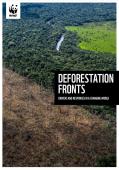
The causes, pace and magnitude of deforestation and forest degradation have changed over time. The way that different causes of deforestation link together and the effects they have on forests varies across regions. Globally, a multitude of approaches have been implemented to halt deforestation and forest degradation. While progress has been made in halting forest loss and degradation, both continue at alarming rates.

This report provides a comprehensive analysis of deforestation connecting drivers and responses globally by taking a closer look at 24 “deforestation fronts” – places that have a significant concentration of deforestation hotspots and where large areas of remaining forests are under threat. Over 43 million hectares were lost in these fronts between 2004 and 2017, an area roughly the size of Morocco.
World Resources Institute (WRI)
This paper provides the first assessment of the landscape of public international funding for nature-based solutions for climate adaptation, covering both climate finance and Official Development Assistance (ODA).
University of Oxford
COVID-19 has led to a global crisis threatening the lives and livelihoods of the most vulnerable by increasing poverty, exacerbating inequalities, and damaging long-term economic growth prospects. This report provides an analysis of over 3,500 fiscal policies announced by leading economies in 2020 and calls for governments to invest more sustainably and tackle inequalities as they stimulate growth in the wake of the devastation wrought by the pandemic.
The inequalities-environment nexus Towards a people-centred green transition_OECD.JPG
Organisation for Economic Co-operation and Development (OECD)
The analysis shows that the impacts of environmental degradation tends to be concentrated among vulnerable groups and households. At the same, the benefits and costs of environmental policies are also likely to be unevenly distributed across households.
Online
Organisation :
soil quality
The Asian Development Bank Institute (ADBI) is hosting a course on Governing Sustainable Finance. This course explores the fundamentals of sustainable finance, climate risk assessment, and the integration of environmental, social, and governance (ESG) factors into investment strategies.
Organisation :
World Bank Group
The purpose of this report is to provide development practitioners and government officials with an understanding of the context and key design features of climate budget tagging initiatives. It is based on a review of 18 climate budgeting tagging methodologies as well as key informant interviews with practitioners during 2020.
International Renewable Energy Agency (IRENA)
The Government of Antigua and Barbuda proposed a target of achieving 100 percent of its energy generation from renewable energy sources by 2030. Subsequently, this renewable energy roadmap for Antigua and Barbuda has been developed by the International Renewable Energy Agency (IRENA) at the request of the Ministry of Health, Wellness and the Environment.