
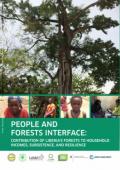
Liberia is one of the most forested countries in West Africa, with more than two thirds of its land surface covered by forest, and its forest contribution to the national economy runs between nine and 10 percent of GDP.
This working paper draws on the latest economic research to demonstrate how climate policy and investments in low-carbon infrastructure can reboot America’s economy and set it up for long-term success.
This webinar will present highlights from the USAID-funded Climate Economic Analysis, Development, Investment, and Resilience (CEADIR) Activity’s Climate Finance Assessment: Opportunities for Scaling Up Financing for Clean Energy, Sustainable Landscapes, and Adaptation. It will describe experiences of USAID and other development assistance organizations to expand investment from the private sector and other sources.
This discussion paper presents key findings and options for mineral governance developed by UNEP and others.
This technical report outlines the concept, method, and step-by-step guidance of the 3Returns Framework for decision makers to incorporate financial, natural, and social and human capital when analysing sustainable landscape interventions.
The report showcases the results of piloting the 3Returns Framework in the coastal ecosystem restoration of mangrove forests in the Ayeyarwady Delta, Myanmar, demonstrating monetary and non-monetary benefits of restoration.
This essay compilation covers a wide range of development trends and issues of critical importance to the achievement of the SDGs and the recovery from COVID-19.
The IUCN Global Standard for Nature-based Solutions lists the Criteria and Indicators, as adopted by the 98th Meeting of the IUCN Council in 2020.

On July 22 2020, 14:30 (CEST), WRI hosted a webinar on 'Beyond GDP: National Accounting for the Ocean and Ocean Economy'.
This report explores the benefits of including water and sanitation in South Africa’s stimulus package and considers possible avenues to do so.