

This Climate Policy Initiative (CPI) study is part of a research program which explores the potential of developing a green investment bank model in Indonesia. More specifically, it is focused on the potential of developing a guarantee instrument to help catalyze renewable energy investments in Indonesia.
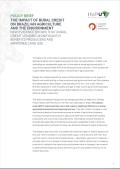
This policy brief summarizes findings from an emerging portfolio of research by Climate Policy Initiative (CPI) on the role rural credit plays in Brazil. CPI analysts determined that rural credit makes a significant difference in raising agricultural productivity and improving land use. They show that an increase in rural credit lending leads to improvements across a number of agricultural indicators, including municipal crop production, agricultural GDP, total municipal GDP, cropland productivity, and rural worker crop productivity. The analysts conclude that lack of financial resources often limits farmers’ production possibilities in Brazil. Improved credit access allows producers to make new decisions that lead to higher productivity.
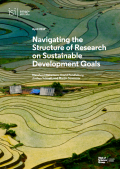
The report Navigating the Structure of Research on Sustainable Development Goals reveals how global research and discovery is evolving to address poverty, reduce inequality and deal with the effects of climate change via the UN Sustainable Development Goals (SDGs).
This report examines the transition risks to the economy of South Africa—and its government, municipalities, companies, and financial institutions—from a global economic transition to a low-carbon economy. The analysis in the report not only quantifies the downside risk of South Africa’s transition, but it also forecasts some of the potential benefits of a transition such as the impact of a lower global oil price that is passed through to consumers.

This paper evaluates the level of integration of climate mitigation and adaptation in cities’ local climate action plans and explores the different types of mitigation—adaptation interrelationships. It comprehensively evaluates nine adaptation and mitigation plans and presents a framework, which identifies the following sectors as avenues for synergy (or co-benefits): urban greening, urban agriculture, and water management.
This proposal is a long-term key plan that maps out the road Japan should take to realise a decarbonised society towards GHG reduction strategy for 2050 as required under the Paris Agreement.

The Nordic countries rank high in international reports of nations' progress towards the Sustainable Development Goals (SDGs). Along with other industrialised countries, however, the Nordic countries have been ranked poorly in their progress towards SDG12, which concerns sustainable consumption and production. This report assesses Nordic countries’ progress towards SDG12, looks closer at their main challenges in achieving SDG12, and identifies recommendations that Nordic national governments and the Nordic Council of Ministers can adopt to accelerate progress in areas that are currently lagging.
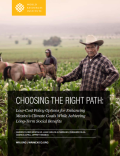
This report identifies a mix of 21 policy levers with which it would be possible to achieve Mexico’s conditional nationally determined contribution (NDC) at an average cost of US$12 per ton.
This article explores whether the Global Climate Action Agenda (GCAA) effectively mobilises and prioritises transnational adaptation action.
The report proposes a framework to understand intertwined objectives of empowering people, ensuring inclusiveness and equality as fundamental features towards realising the 2030 Sustainable Development Agenda.