
The aim of this paper is to review existing evidence on the role of renewable energies in bringing gender equity. The paper first explores the evolution of thinking on gender and energy, in particular that practitioners no longer specifically focus on women and stoves (often referred to as “household energy”). Next, the reasons why gender analysis can help those people trying to increase the dissemination of renewable energy technologies are presented. There is a brief description of the gender aspects of household energy, and how different renewable energy technologies can contribute to drudgery reduction and time saving, particularly for women. The role of women in renewable energy is analysed. The paper concludes with an analysis of lessons learnt and recommendations.
This guidance note provides a brief overview of issues related to gender equality, women’s empowerment and sustainable energy. Prepared specifically for the regional and country offices of UN Women and UNIDO, the note aims to provide guidance for UN programming and work with policy makers around sustainable energy that integrates the gender dimensions. The note can help strengthen collaboration with national and regional partners, as well as members of UN Country Teams, and promote South-South exchange of experiences in generating and supplying sustainable energy for all women and men, girls and boys.
The World Survey on the Role of Women in Development is a UN Secretary-General report mandated by the Second Committee of the General Assembly and comes out every five years. The 2014 report focuses on gender equality and sustainable development, with chapters on the green economy and care work, food security, population dynamics, and investments for gender-responsive sustainable development. The report comes at a crucial moment, as the global community grapples with the definition of the Sustainable Development Goals and the emergence of the post-2015 framework. This report also offers a comprehensive set of recommendations for gender-responsive policy actions and investments towards sustainable development overall, as well as for the selected areas which the World Survey emphasizes.
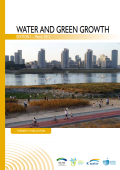
This report is the first major output of a project on Water and Green Growth, led by the Government of the Republic of Korea and the World Water Council (WWC). It is the result of over 12 months of research and analysis by an international group of experts. It provides an analysis of 26 case studies that illustrate various aspects of water and green growth, and then uses the analysis to recommend a draft framework for policymakers.
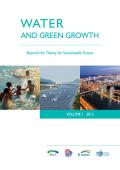
This report was launched at the 7th World Water Forum in Daegu, Gyeongbuk, Republic of Korea. It presents the research conducted from 2011 - 2014, a new theoretical approach, a revised analytical framework and recommendations for policy makers to begin the process of implementing water and green growth strategies. The report provides a recap of the history and rationale behind the development of the Water and Green Growth Project and concept. The analytical framework used in the report has been developed through numerous discussions between experts in various fields and encompasses strategic, institutional, and practical approaches.
The Europe 2020 Strategy has identified the key goal of smart, more inclusive and sustainable growth. In this direction, redirecting firms’ innovation activities towards ecological targets without hampering their competitiveness is of paramount importance. The double externality issue related to environmental innovations makes the policy intervention crucial in order to avoid sub-optimal commitment of resources to the innovation process and ensure the reduction of polluting agents emissions.
REsource, the online knowledge platform launched by the International Renewable Energy Agency (IRENA), enables users to easily find country-specific data, create customized charts and graphs, and compare countries on metrics like renewable energy use and deployment. REsource also provides information on general renewable energy market statistics, potentials, policies, finance, costs...
There is an increasing focus on the role that public and private resources can play in supporting activities that reduce forest loss as part of wider efforts to address climate change, and ensure sustainable development.
This report develops an analytical framework that assesses the macroeconomic, environmental and distributional consequences of energy subsidy reforms. The framework is applied to the case of Indonesia to study the consequences in this country of a gradual phase out of all energy consumption subsidies between 2012 and 2020. The energy subsidy estimates used as inputs to this modelling analysis are those calculated by the International Energy Agency, using a synthetic indicator known as "price gaps". The analysis relies on simulations made with an extended version of the OECD’s ENV-Linkages model. The phase out of energy consumption subsidies was simulated under three stylised redistribution schemes: direct payment on a per household basis, support to labour incomes, and subsidies on food products.