
This report focuses on the results of a public-private dialogue in the Greater Mekong Subregion (GMS). The report outlines the key findings and recommendations from the event held in Bangkok, Thailand, in June 2013, and provides insights into the key opportunities emerging from the transition to a green economy in the region. Initiated by the OSLO Consortium, the public-private dialogue was co-organised by the Global Mechanism, the Asian Development Bank, UNEP, UNDP, FAO and WWF.
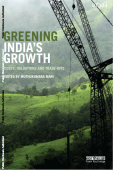
India’s sustained and rapid economic growth offers an opportunity to lift millions out of poverty. But this may come at a steep cost to the nation’s environment and natural resources. Greening India's Growth: Costs, valuations and trade-offs analyzes India’s growth from an economic perspective and assesses whether India can grow in a “green” and sustainable manner.
This paper examines the relative attractions of a carbon tax, a “pure” cap-and-trade system, and a “hybrid” option (a cap-and-trade system with a price ceiling and/or price floor). The paper shows that the various options are equivalent along more dimensions than often are recognised. In addition, the authors bring out important dimensions along which the approaches have very different impacts. Several of these dimensions have received little attention in prior literature. A key finding is that exogenous emissions pricing (whether through a carbon tax or through the hybrid option) has a number of attractions over pure cap and trade. Beyond helping prevent price volatility and reducing expected policy errors in the face of uncertainties, exogenous pricing helps avoid problematic interactions with other climate policies and helps avoid large wealth transfers to oil exporting countries.
Questions about the ultimate size of mineral and energy resource endowments and the degree of fiscal prudence which should be exercised by countries engaged in resource extraction have become central for many developing countries during the recent resource boom. To explore these questions, this paper develops a model of optimal resource extraction and discovery that combines two polar assumptions: (i) that discovering a resource today drives up the cost of future resource discoveries, and (ii) that extracting resources yields knowledge that reduces the cost of discovery.
Although the model shows that resource discoveries should be valued at marginal discovery cost in measures of national saving and income, the ultimate size of the resource that can be exploited is the result of the interplay between rising discovery costs and accumulating knowledge. Empirical tests of the model show that the resulting income estimates would be extremely volatile for many extractive economies, owing to the lumpiness of resource discoveries. Two alternative accounting approaches, based on Hicksian concepts, yield more intuitive and less volatile income estimates.
China’s economy continues to grow rapidly with corresponding increases in both energy consumption and environmental pollution. Renewable energy is a key part of China’s response to this challenge. Currently, the costs of measures to facilitate the large-scale deployment of renewable energy are primarily met through an electricity surcharge—effectively a tax on electricity consumption. However, concerns have been raised that continuing to rely on the surcharge alone places a disproportionate burden on electricity consumers. In response, the International Institute for Sustainable Development (IISD) and the China National Renewable Energy Centre (CNREC) identified the need for further debate on how best to fund renewable energy and reduce environmental pollution, leading to the establishment of a research project to examine the international experience of similar schemes and their relevance to China.
The publication includes case studies from Australia, Canada, Denmark, Germany, India, Japan, the United Kingdom, and the United States.
This publications looks at the measures that the Jamaican government can take to transition its electricity sector to one that is socially, environmentally and financially sustainable. It analyses the potential for energy efficiency and renewable energy deployment in Jamaica and discusses the social and economic impacts of alternative energy pathways. The report concludes that a scenario of high renewable penetration can bring many benefits to the country, including significant savings, greater energy security and gains in competitiveness.
Green industrial policies can be defined as industrial policies with an environmental goal - or more precisely, as sector-targeted policies that affect the economic production structure with the aim of generating environmental benefits. This paper provides a framework to assess their desirability depending on the effectiveness and political acceptability of price instruments. The main messages are the following:
The photovoltaic (PV) industry has grown rapidly as a source of energy and economic activity. Since 2008, the average manufacturer-sale price of PV modules has declined by over a factor of two, coinciding with a significant increase in the scale of manufacturing in China. Using a bottom-up model for wafer-based silicon PV, the article examines both historical and future factory-location decisions from the perspective of a multinational corporation. The model used calculates the cost of PV manufacturing with process step resolution, while considering the impact of corporate financing and operations with a calculation of the minimum selling price that provides an adequate rate of return. The article quantifies the conditions of China's historical PV price advantage, examines if these conditions can be reproduced elsewhere, and evaluates the role of innovative technology in altering regional competitive advantage. The authors find that the historical price advantage of a China-based factory relative to a U.S.-based factory is not driven by country-specific advantages, but instead by scale and supply-chain development.
Green growth is about making growth processes resource-efficient, cleaner and more resilient without necessarily slowing them. This paper aims at clarifying these concepts in an analytical framework and at proposing foundations for green growth. The green growth approach proposed here is based on: (1) focusing on what needs to happen over the next 5–10 years before the world gets locked into patterns that would be prohibitively expensive and complex to modify; and (2) reconciling the short and the long term, by offsetting short-term costs and maximising synergies and economic co-benefits. This, in turn, increases the social and political acceptability of environmental policies. This framework identifies channels through which green policies can potentially contribute to economic growth. However, only detailed country- and context-specific analyses for each of these channels could reach firm conclusions regarding their actual impact on growth. Finally, the paper discusses the policies that can be implemented to capture these co-benefits and environmental benefits.