
The World Investment Report supports policymakers by monitoring global and regional investment trends and national and international policy developments. This year’s report reviews investment in the Sustainable Development Goals and shows the influence of investment policies on public health and economic recovery from the pandemic.
Flood and drought disasters impose a huge toll: Over the last two decades, at least 1.65 billion people have been affected by floods and 1.43 billion by droughts. A new perspective, referred to as an "EPIC Response," is offered to better manage hydro-climatic risks: This perspective looks at floods and droughts not as independent events but rather as different ends of the same hydro-climatic spectrum that are inextricably linked.
Efforts to protect and restore nature have overlooked the biggest single factor in biodiversity loss: the world’s inefficient and irresponsible use of natural resources. This report can help policymakers look to natural resource management approaches to address the drivers of biodiversity loss for climate, nature and socially just economic and social development.
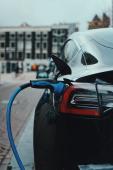
Electrifying vehicles in ride-hailing services, such as Uber and Lyft, is critical to accelerating the EV transition and provides key catalytic opportunities: lowering EV operational cost, creating a profitable investment opportunity for building fast-charging infrastructure, and equitably expanding EV charging capacity for all.
This World Bank study explores economic impacts on local economies, as local economic development is a goal in-and-of itself, and community support is a critical concern for protected areas and is needed to secure their long-term integrity. It also estimates protected area tourism’s economic costs and benefits to local communities, and explores how benefits may be increased and costs reduced.