
The COVID-19 pandemic has worsened the debt vulnerabilities of many low- and medium-income sovereigns. Debt levels were already high for many even prior to the COVID-19 outbreak, but are now exacerbated because government revenues have declined as a result of limited economic activity – while the timing and the quantum of debt servicing payments remain the same. This report suggests the eligibility and condition criteria, principles for using proceeds from swaps, and offer concrete opportunities for using the redirected flows in select countries to address mitigation through examples such as accelerated coal power retirement, increased energy efficiency adoption, and adaptation and nature-based solutions to enhance resilience.
This publication features several case studies around the world where nature-based technologies are being employed to manage the human water cycle.
The Ministry of Mining of Ecuador, with PAGE support, identified an opportunity to apply a TSA study to assess and improve artisanal and small-scale mining practices by implementing the Responsible Mineral Processing (RMP) approach to increase the profitability of the gold supply chain. This alternative approach also provides options for improving government regulations.
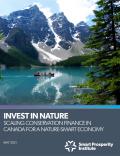
Canada’s natural assets are globally significant in addressing the twin challenges of biodiversity loss and climate change. This report explores implementation pathways, success factors, and identifies key barriers and opportunities to grow the market for nature investment in Canada.
This working paper, produced in partnership with Ørsted, focuses on the challenges and solutions to scaling investment in renewable energy generation and provides actionable policy solutions to unlock the private sector investment needed to support the energy transition.