
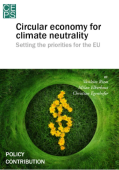
This Policy Brief looks at how circular economy can support EU climate policy, emphasizing that circular economy is more than just another ‘product standards’ policy. It calls for a framework that is able to systematically address trade-offs, a mechanism to steer and monitor progress, and the need to develop and then scale up successful products and processes to create opportunities for new value chains while addressing risks, such as dependency on raw materials.

Contributors to this issue of UNIDO’s Making It magazine look at the circular economy from a variety of angles, from Ken Webster’s introduction to systems thinking to Ewa Lewandowska’s argument for social equality to be included in the design of the new circular economy. The issue also takes a look at the design and re-design aspects of circularity, and introduces the Rizhao eco-industrial park, one of the best examples of the impact of Chinese government policies that encourage industrial symbiosis as part of its circular economy drive.
This paper examines how climate-related damages impact the stability of the global banking system.
The State of Sustainable Markets 2019: Statistics and Emerging Trends provides a snapshot of substantial growth of sustainability standards for bananas, cocoa, coffee, cotton, oil palm, soybean, sugarcane, tea and forestry products.
This paper highlights the role of national development bank (NDBs), drawing from case studies of the Brazilian Banco Nacional de Desenvolvimento Econômico e Social and the Development Bank of Southern Africa.