
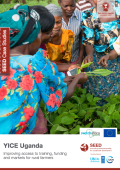
Based in Western Uganda, the Youth Initiative for Community Empowerment (YICE) is an eco-inclusive enterprise that provides a variety of agricultural services to smallholder farmers to improve their livelihoods.
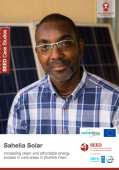
Sahelia Solar is an eco-inclusive enterprise located in Ouagadougou, the capital of Burkina Faso, and specialises in the design and supply of a range of solar energy systems.
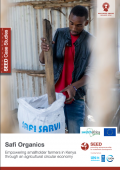
Based in Mwea County, one of the largest producers of rice in Kenya, Safi Organics is an eco-inclusive enterprise that aims to reverse declining agricultural yields, improve the income and food security of local farmers, and provide opportunities for local youth.
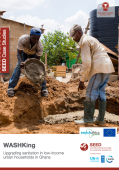
Since its establishment in 2016, the eco-inclusive enterprise WASHKing aims to eradicate open defecation and poor sanitation in low-income urban communities in Accra, Ghana.
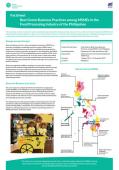
The study, Best Green Business Practices among MSMEs in the Food Processing Industry of the Philippines, aims to promote pioneering cases of micro, small and medium enterprises (MSMEs) sharing their stories on how their committed actions to protect the surrounding environment and resources became beneficial both financially and socially

The River Basin Management and Fiscal Decentralisation: Mutually Supportive or Counterproductive? paper finds that at the sub-national level, a high number of actors are involved in water governance. Despite a broad division of labour, a high level of overlap exists in terms of data management; monitoring water resources, water uses and law implementation; law enforcement; and to a certain degree the implementation of measures among these actors.
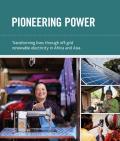
This report, Pioneering Power: Transforming lives through off-grid renewable energy in Africa and Asia, examines the challenge of bringing power to over one billion people who live without electricity, mostly in remote, rural areas in sub-Saharan Africa and South Asia.
Strengthening Shardara Multi-Purpose Water Infrastructure in Kazakhstan, studies the choice and design of MPWI investment strategies that ensure a high economic return on investments and potential bankability, based on the application of a computer model and lessons learned from 15 international MPWI case studies.
The Economics of Land Degradation (ELD) case study of Namibian highlights the economic and environmental benefits of bush control on national and local level.
The case study, The Economics of Conventional and Organic Cotton Production in Benin presents an analysis of the economics of pesticides use and resulting occupational health issues in cotton production.