

This case study, The Economic Value: Shouf Biosphere Reserve , is aiming to describe, in preliminary terms, the economic value of the Shouf Biosphere Reserve (SBR), Lebanon, by valuing carbon sequestration, fuel provision (briquettes production), water provision, food provision, tourism, and cultural services and patrimonial values.
This case study, Economic Value of Ecosystem Services in Ichkeul National Park, Tunisia , aims to assess the economic value of ecosystem services provided by the Ichkeul National Park (INP), with the objective to increase awareness among decision-makers and users to ensure the conservation and sustainable use of the different components of natural capital and biodiversity present within the park.
This Technical Report, Valuing Protective Services of Mangroves in the Philippines: Technical report, provides a social and economic valuation of the flood protection benefits from mangroves in the Philippines. This work aims to support decisions across development, aid, risk reduction, and conservation sectors as they seek to identify sustainable and cost-effective approaches for risk reduction. Using high-resolution flooding models, the Report examines the flooding that would occur with and without mangroves under different storm conditions throughout the Philippines and estimates the annual expected benefits of mangroves for protecting people and property in social and economic terms.
This technical report, Pilot Ecosystem Account for Laguna de Bay Basin , explores the specific challenges confronting natural resource management in the Laguna de Bay Basin, and presents the key findings of the ecosystem account developed between January 2014 to December 2015.
This technical report, Pilot Ecosystem Account for Southern Palawan, explores the specific challenges confronting natural resource management in Southern Palawan and presents the key findings of the ecosystem accounts, which were developed at different scales (depending on data availability), including the Pulot watershed and the municipalty of Sofroñio Española.
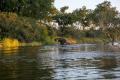
This report, Consultation Draft for the Zambia Water Account , represents the first ever attempt at producing water accounts for the Republic of Zambia, following the System of Environmental Economic Accounting (SEEA), which aims at giving stakeholders an opportunity to provide feedback to the work so far, such that a better version of the water accounts can be produced.
This technical report and its accompanying policy brief provide a social and economic valuation of the flood protection benefits from mangroves in the Philippines.
This case study, Natural Capital and Sustainable Development in Madagascar , summarizes the work done in the framework of the implementation of macroeconomic indicators to inform public policies on realistic and effective indicators. Madagascar is one of the five pilot countries engaged since 2011 in the Global Partnership for Wealth Accounting and the Valuation of Ecosystem Services - WAVES.
This case study presents a discussion on the possibilities of implementing and using energy accounts in developing countries as a complement to traditional energy balances and statistics, which is particularly applicable in Central American countries.
In this technical paper, Water Accounts in Madagascar: Concepts and results , results for national water accounts prepared as part of the WAVES partnership are presented. These water accounts will make it possible to improve the management of water in the Malagasy territory, in proportion to the consumption of users, and to meet the needs of industries and growth sectors.