
This report proposes a series of actions that governments can undertake to achieve a fossil-free recovery, following five key principles that countries can apply to transition to a low-carbon economy while using their energy systems to boost their economies, create employment, and meet their climate and development goals.
This paper aims to help market participants and stakeholders better understand existing sustainable finance taxonomies and their usage.
This briefing lays out six ways social partners, such as trade and labour unions, can ensure a just transition to the circular economy.
The Latin American and Caribbean (LAC) region encompasses a wide range of ecological systems, including globally significant ones such as the Amazon rainforest. The region is increasingly experiencing extreme weather events such as Hurricane Iota in November 2020 which caused serious damage in Nicaragua and Honduras and devastated Colombia’s Caribbean islands, destroying nearly all the infrastructure on Providencia and causing severe damage to San Andrés and Santa Catalina.
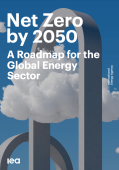
This special report is the world’s first comprehensive study of how to transition to a net zero energy system by 2050 while ensuring stable and affordable energy supplies, providing universal energy access, and enabling robust economic growth.
Online
ADBI offers an e-course on "Climate Change and Sovereign Risk". This course examines ways climate change affects the cost of sovereign borrowing—the interest rate on debt issued by a central government that determines debt servicing costs.
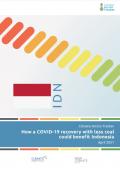
While the social and economic effects of COVID-19 are likely to last for many years, careful recovery planning can mitigate negative long-term impacts. For Indonesia, reassessing its reliance on coal for electricity would be an important step in the country’s green recovery.

This report explores developments in the field of the circular economy in the Arab States of the Gulf region (notably the members of the GCC – the Cooperation Council for the Arab States of the Gulf), to identify areas where the EU and the GCC countries can strengthen their collaboration.
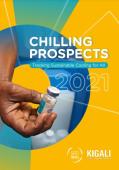
This is the fourth edition of the ground-breaking Chilling Prospects series of SEforALL, which tracks immediate vulnerability due to a lack of access to cooling. The work identifies populations at risk for whom a lack of access to cooling threatens their immediate health and safety.
The post-2020 Global Biodiversity Framework (GBF) will be a major milestone in global agreements on biodiversity conservation, setting international ambition for the next decade. This guide is intended to support Parties to the Convention on Biological Diversity (CBD) who wish to see strengthened equity provisions in the draft GBF.