
This report presents a compilation of examples that can inspire the practical implementation of a green recovery, drawing upon measures and instruments that have been deployed in countries worldwide, particularly in developing and emerging economies. The collection comprises 23 examples from more than 19 countries.
The report from the Science Based Targets initiative (SBTi) takes stock of corporate climate ambition in G7 countries. It assesses the temperature ratings of the leading equity indexes of their markets and frames science-based target setting as the solution to bridge the ambition gap, outlining levers to unlock breakthrough climate mitigation action.

Over the last two decades, private equity has outperformed other asset classes while growing tremendously, adding $US trillions in assets under management. Based on its recent returns and scale, private equity is more attractive and more influential than ever before. The Changing Climate for Private Equity, a joint research project between the SustainAbility Institute by ERM (the SustainAbility Institute) and Ceres, seeks to understand how deeply climate-related expertise is embedded within private equity firms and to explore what climate performance expectations they impose on the companies in which they invest.
By linking financial rewards to climate objectives, Results-based Finance (RBF) enables innovative financing arrangements that can accelerate funding from the private sector. RBF interventions are well suited to target sectors most affected by COVID-19 while reducing risk and pressure for public spending. This report assesses the potential for Results-based Finance (RBF) to expand postCOVID-19 recovery funds while improving sustainability efforts.
The COVID-19 pandemic has worsened the debt vulnerabilities of many low- and medium-income sovereigns. Debt levels were already high for many even prior to the COVID-19 outbreak, but are now exacerbated because government revenues have declined as a result of limited economic activity – while the timing and the quantum of debt servicing payments remain the same. This report suggests the eligibility and condition criteria, principles for using proceeds from swaps, and offer concrete opportunities for using the redirected flows in select countries to address mitigation through examples such as accelerated coal power retirement, increased energy efficiency adoption, and adaptation and nature-based solutions to enhance resilience.
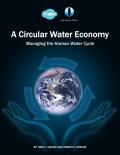
This publication features several case studies around the world where nature-based technologies are being employed to manage the human water cycle.
The Ministry of Mining of Ecuador, with PAGE support, identified an opportunity to apply a TSA study to assess and improve artisanal and small-scale mining practices by implementing the Responsible Mineral Processing (RMP) approach to increase the profitability of the gold supply chain. This alternative approach also provides options for improving government regulations.
This policy brief sets out policy recommendations to encourage more municipalities to develop Local Biodiversity Strategies and Action Plans (LBSAPs) and to help improve them for better outcomes.
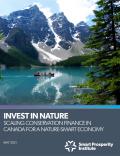
Canada’s natural assets are globally significant in addressing the twin challenges of biodiversity loss and climate change. This report explores implementation pathways, success factors, and identifies key barriers and opportunities to grow the market for nature investment in Canada.
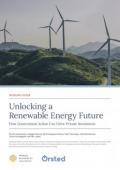
This working paper, produced in partnership with Ørsted, focuses on the challenges and solutions to scaling investment in renewable energy generation and provides actionable policy solutions to unlock the private sector investment needed to support the energy transition.