
This document provides an analysis of chemical and non-chemical alternatives to pentachlorophenol (PCP) for wood treatment, evaluating chemical alternatives like Chromated Copper Arsenate (CCA) and non-chemical options such as concrete and steel.
This document provides updated guidance on chemical and non-chemical alternatives to hexabromocyclododecane (HBCD), with a focus on its use in polystyrene foam applications. It includes evaluations of the availability, cost, efficacy and environmental impacts of these alternatives.
This document provides details on the specific exemptions granted, including its use in vehicles, aircraft and textiles, as well as information on chemical alternatives to phase out decaBDE in line with the Convention's objectives.
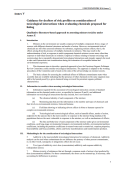
This document outlines a practical approach for the Persistent Organic Pollutants Review Committee to consider these toxicological interactions, using state-of-the-art knowledge on mixture toxicity to improve risk assessments.
The guidelines provide a comprehensive list of environmental indicators designed to inform global policies, enhance their connection to statistical frameworks and improve the usability of metadata.
This report outlines a set of guidelines to ensure that the mining and extraction of minerals crucial for renewable energy technologies are done in a way that prioritizes social justice and environmental sustainability.
This paper delves into the various strategies to unlock the supply of critical minerals, identifying key barriers to investment and innovation while proposing solutions to overcome them.
This analysis focuses on key rice management practices that enhance sustainability and align with the Sustainable Rice Platform (SRP) Standard.
The report explores Brazil’s creative methods for fighting hunger through urban and peri-urban agriculture.
This paper highlights three issues – sharing the burden fairly, closing the finance gap and creating a shared vision – that must be addressed to transform economies and societies.