
This report identifies gaps to address marine plastics at each value chain stage and recommends actions to achieve a circular economy for plastics at the global level.

This resource describes CIF's main achievements up to 2020, along with its strategies and priorities. This is supported by key examples of recent projects around the globe, such as CIF support for farmers and ranchers in the Brazilian Cerrado piloting low-carbon agricultural practices. Key roles played by CIF in climate finance, as a learning lab, and as a pioneer in climate change action, are highlighted. A list of CIF program snapshots and CIF-GDI case studies are included.
The report concludes with CIF's focus points for 2021:
This study assesses the level of integration of mitigation and adaptation (IMA) in urban climate change plans across 44 major Latin America and the Caribbean (LAC) cities.
This report introduces the role that sustainable procurement can play to accelerate the transition to a circular economy and the shift towards more sustainable patterns of consumption and production. It is addressed to both public procurers and policy makers as well as corporate buyers and business leaders.
This report assesses the potential contribution of the Pilot Program for Climate Resilience for building a climate resilient water governance framework in the Plurinational State of Bolivia
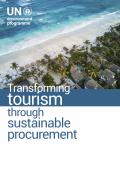
This case study discusses the role that sustainable procurement could play in transforming tourism by scaling up the market of sustainable products and services.

This page collates the information on COVID-19 from United Nations (UN) offices, field missions, agencies, funds, and programmes, along with the World Health Organisation (WHO).

The Global Tourism Plastics Initiative aims to support the tourism sector to encourage a more sustainable approach to plastics use and waste, for tangible, crucial steps towards sustainable tourism.
The report synthesises the most relevant barriers and drivers for collaborative concentrated solar power (CSP) deployment as well as the major lessons learned on CSP development and renewable energy sources (RES) cooperation in Europe.
The resource, Modeling ECL during the COVID-19 pandemic: Providing flexibility to avoid procyclicality explores how new Expected Credit Losses (ECL) standards work, how they introduce procyclicality under deteriorating credit conditions, and what actions and guidance regulators and accounting standard-setting bodies have issued to help avoid excessive procyclicality throughout the current COVID19 crisis.