

Browse Knowledge

Sort by
Recommendations for GPP Incentive Mechanisms.png
Korea Environmental Industry & Technology Institute (KEITI)
This report aims to examine the incentive mechanisms designed to promote the implementation of Green Public Procurement (GPP) in Korea and certain countries in the Asian region, including Japan, China and Malaysia, and also to propose measures to accelerate the adoption of GPP in Thailand, which the Thai government may wish to take into consideration.
Smart Procurement - Going Green- Best Practices for Green Procurement.png
Organisation for Economic Co-operation and Development (OECD)
This compendium is part of the on-going OECD public procurement reform agenda, which includes a new Recommendation of the Council on Public Procurement, the identification of good practices in green public procurement (GPP), transparency and anti-corruption, peer reviews and the development of procurement performance indicators to support evidence-based decision-making.
Sustainable Public Procurement- A Global Review 2013.png
United Nations Environment Programme (UNEP)
This report contains the findings of an investigation into the national government sustainable and green public procurement (SPP/GPP) policies and practices around the world. The policies, programmes, drivers, barriers, needs and opportunities in SPP/GPP are examined, based on an analysis of recent literature and online resources, and interviews with 20 leading experts on SPP/GPP.
Organisation :
United Nations Environment Programme (UNEP)
One Planet Network

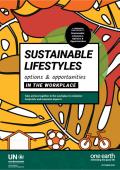
Workplaces can support and motivate tangible shifts in their employees’ and customers’ lifestyles towards sustainability. These efforts target those working with companies, organizations and individuals who are open and willing to adopt sustainable lifestyles practices but need some help or guidance along the way. Companies can incentivize employees and customers to adopt sustainable ways of eating, moving, consuming, living and engaging in leisure activities, and demonstrate these actions at work. The set of actions presented in this report can support employees and customers to enhance sustainability in their daily lives. The actions have been prioritized because they are more effective at reducing the ecological footprint. Based on ecological and carbon footprint data, we can identify priority lifestyles areas that contribute to ecological impacts such as reducing wasted food or shifting transportation modes. For the highest impacts, link options together, build on existing activities, and partner with others.

Photo by Franck V. on Unsplash
This policy tracker summarises the key economic responses governments are taking to limit the human and economic impact of the COVID-19 pandemic. The tracker includes 193 economies.
Organisation :
Food and Agriculture Organization of the United Nations (FAO)
This report presents the results of the implementation of the Global Bioenergy Partnership (GBEP) indicators in Viet Nam. The overall objective of the project was to strengthen the capacity of Viet Nam and Paraguay to monitor the environmental, social and economic impacts of their bioenergy sector, through the implementation of the GBEP Sustainability Indicators for Bioenergy and related technical support.
Organisation :
Food and Agriculture Organization of the United Nations (FAO)
This report presents the results of the testing of the GBEP indicators in Indonesia. The testing provided Indonesia with an understanding of how to establish the means of a long-term, periodic monitoring of its domestic bioenergy sector based on the GBEP indicators.
Organisation :
World Bank Group
This report summarizes the work of the World Bank's initiative "Wastewater: From Waste to Resource," launched to raise awareness among decision makers regarding the potential of wastewater as a resource. The report highlights the findings and conclusions from technical background reports, from an in-depth analysis of several case studies, and from the feedback received during workshops and seminars with main stakeholders.
International Labour Organization (ILO)

COVID-19 will have far-reaching impacts on labour market outcomes. Beyond the urgent concerns about the health of workers and their families, the virus and the subsequent economic shocks will impact the world of work across three key dimensions: 1) The quantity of jobs (both unemployment and underemployment); 2) The quality of work (e.g. wages and access to social protection); and 3) Effects on specific groups who are more vulnerable to adverse labour market outcomes.

In times of crisis, International Labour Standards provide a strong foundation for key policy responses that focus on the crucial role of decent work in achieving a sustained and equitable recovery. These standards, adopted by representatives of governments, workers’ and employers’ organizations, provide a human-centred approach to growth and development, including by triggering policy levers that both stimulate demand and protect workers and enterprises.

In this policy note, the ILO provides a policy framework for addressing COVID19 with three pillars:

Protecting workers in the workplace
Organisation :
United Nations (UN)
The United Nations has released a report calling for large-scale, coordinated and comprehensive multilateral response to the COVID19 pandemic, estimates that at least 10 per cent of global GDP is needed.