

This report provides key messages on major environmental trends in areas such as climate change, biodiversity, water resources, air quality, and circular economy, based on indicators from the OECD Core Set of Environmental Indicators.
This document acts as a technical annex to the Technical Expert's Group on Sustainable Finance's (TEG) final recommendations to the European Commission on the EU Taxonomy of Sustainable Finance.
Projections estimate that between 2000 and 2050, the world population will grow 50 percent and global energy and materials use will grow 300 percent. Therefore, the strategic importance of materials is causing many people to look carefully at all aspects of the material lifecycles that comprise our industrial practices and consumer habits.
This report discusses materials management—how best to provide for human needs and prosperity while using fewer materials, reducing toxic products, and recovering more of the materials used. It includes background information on material usage within the United States, describes challenges related to sustainability and environmental impacts, and provides an analytic framework for materials management. The report also provides three key recommendations for achieving sustainable materials management:

This paper examines the extent to which addressing climate-related risks and supporting sustainable finance fit into the current set of central bank mandates and objectives.
This report analyses two economic inflection points critical to understanding the relative competitiveness of coal power.

This report examines the emergent role of sustainable finance and investment in Japan and scrutinize the need for the Japanese financial system to mitigate growing climate risks and support the transition of the Japanese economy to a low-carbon, sustainable pathway.
This guide shows how a lifecycle approach can be used to identify and reduce the environmental and health impacts of the products consumers use. It underlines the importance of considering these issues across the entire lifecycle of a product and sets them within the context of policy development, business strategy, innovation, and better customer choice. The case studies highlighted offer an ideal starting point in understanding the full environmental implications of products.
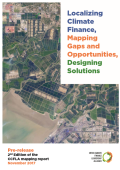
This report presents a global overview of CCFLA member’s responses to close the subnational resilient infrastructure investment gap, highlighting the diversity of financial and non-financial products and services developed by CCFLA members. It provides a background on local and regional governmental climate finance, and describes challenges and opportunities associated with this area.
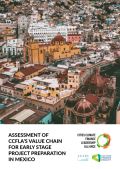
This report maps existing initiatives of identified CCFLA members in Mexico with regards to local and regional governments. Focusing on early-stage project preparation, the report investigates how CCFLA should engage with governments to to offer coordinated and coherent support.
This report explores the ways in which gender inequality is a critical factor in understanding vulnerability and resilience efforts concerning climate change in Sahel, and how policy and state institutions can improve gender equity and climate resilience.