
The report provides the current status of air pollution management, air quality data monitoring and analysis, and offers recommendations for mitigating the impacts of rising air pollution.
This guidance assists countries develop a regulatory framework and monitoring concept that can facilitate monitoring of products and articles that contain persistent organic pollutants.
This guidance document is intended to help parties understand and implement their obligations to control of import and exports of persistent organic pollutants restricted by the Stockholm Convention.
The report summarizes the results of the Tracking Progress Survey, an annual assessment of how companies have progressed on the climate action commitments they have made over the course of the previous year.
This document contains general considerations on benefits of labelling equipment, substances and mixtures containing persistent organic pollutants.
This guide presents a number of considerations to help parties facilitate a calculation of the action plan costs under the Stockholm Convention's national implementation plans.
This guide is for those involved in their country's NIP review and update process, particularly task teams and coordinators responsible for socio-economic assessments.
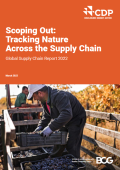
This report considers whether companies are ready to take action on nature impacts in their supply chain by examining their responses on how
they are tackling climate change, deforestation and water security.
This research highlights case studies of policies driving lower-carbon construction across the Pacific Coast region, including their development process, challenges faced and lessons learned through the policy process.
The case study details Egypt's progress in water sanitation, focusing on the rural regions where decentralized sanitation planning and pro-poor strategies for funding have promoted sanitation infrastructure that meets the social needs of the underdeveloped communities in the Nile Delta.