
The Kingdom of Morocco is committed to meeting the challenges of the twenty-first century by making sustainable development a true social project and a new model for development. 7 Challenges with 137 detailed underlying development objectives to operationalise the sustainable development strategy are presented in this document, alongside budgetary and implementation strategies.
In compliance with Article 3 of the Paris Agreement, Morocco formulated its Nationally Determined Contribution (NDC) under the UNFCCC comprising adaptation and mitigation efforts to combat climate change and presented it to the United Nations Framework Convention on Climate Change (UNFCCC) on June 2015. Morocco's vision is to make the country more resilient to climate change while ensuring a rapid transition to a low-carbon economy.

On 18 December 2018, the Graduate Institute Geneva is hosting Environmental Governance: Meet our Alumna in Switzerland, Geneva.
Barbados National Assessment Report was formulated adhering to the affirmation made by The United General Assembly (GA) to provide the international community with an opportunity to conduct an assessment of the progress made in addressing the vulnerabilities of Small Islands Developing State (SID), lessons learned and constraints encountered in the implementation of the Barbados Programme of Action (BPOA).
The report Jordan's Second Communication to the United Nations Framework Convention on the Climate Change (UNFCCC) reflects the most comprehensive outlook about climate change in Jordanian context, the efforts made to address the climate change and its impacts. The report provides an insight into Jordan's emissions mitigation opportunities, and vulnerability and adaptative capacity to climate change.
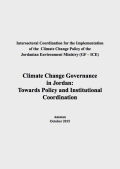
The paper Climate Change Governance in Jordan: Towards policy and institutional coordination includes the summary of the baseline assessments carried out by Deutsche Gesellschaft für Internationale Zusammenarbeit (GIZ) GmbH to provide strategic recommendations for the Jodan Ministry of Government to accelerate the implementation of the policies that align with the national priorities on sustainable development and assist to improve the UNFCCC negotiation process.
Jordan 2025: Part II is the continuation of the paper Jordan 2025: A national vision and strategy. It provides the initiatives and priorities identified through the assessment of the sectoral challenges. These initiatives enable the implementation of the policies and initiatives laid out in the paper Jordan 2025: A national vision and strategy.
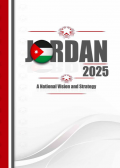
The paper Jordan 2025: A national vision and strategy document Jordan's long-term national vision, strategies and policies that correspond to the basic principles of sustainability, institutionalization, excellence, competitiveness, and meritocracy. The proposed development approach based on these principles clarifies the roles of all actors in the community and the importance of their participation in the process and implementation of the proposed framework.
TO
On 26-28 June 2019, Local Governments for Sustainability (ICLEI) will be hosting Resilient Cities 2019, the 10th Global Forum on Urban Resilience and Adaptation in Bonn, Germany.
TO

On 26-29 June 2019, the Hong Kong University of Science and Technology (HKUST) is hosting the Global Research Forum on Sustainable Production and Consumption on the theme of "Transforming Production and Consumption: Bridging Sustainability Research with Policy and Practice".