
Nepal Status Paper: United Nations Conference on Sustainable Development 2012 (Rio+20) synopsis is a process-driven document and an outcome of discussions and deliberations among civil society, government and non-government stakeholders, parliamentarians and local communities. The findings suggest that Nepal has made significant progress on the policy, legislation and institutional aspects...
This project, Economic Impact Assessment of Climate Change in Key Sectors in Nepal, is being undertaken at the request of the Government of Nepal, and is supported by Climate and Development Knowledge Network (CDKN). This project was initiated to address the target as included in the Climate Change Policy...
The assessment of impacts, adaptation, and vulnerability in Nepal’s National Adaptation Plan (NAP) process evaluates how patterns of risk or potential benefit are shifting due to climate change, and considers how impacts and risks related to climate change can be reduced and managed through adaptation. The framework assesses needs, options...
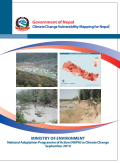
This study report, Climate Change Vulnerability Mapping for Nepal, is a supplementary effort to the National Adaptation Programme of Action (NAPA) process in Nepal. The NAPA was mandated to assess the climatic vulnerability throughout the country and also assess the impacts. This study had adopted the globally recognized process...
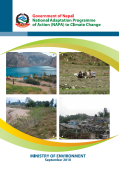
The Government of Nepal has prepared the National Adaptation Programme of Action (NAPA) to Climate Change through a consultative process. NAPA is a strategic tool to assess climate vulnerability and systematically respond to climate change adaptation issues by developing appropriate adaptation measures. This document sets out the introduction and national...
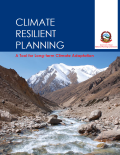
This document, Climate-resilient Planning: A tool for long-term climate adaptation, is intended to facilitate ministries, departments and development organizations in analyzing sector-specific climate issues with a greater understanding of climate variables at the local level and in adopting measures to reduce the emerging and anticipated climate threats which face development...
The Ministry of Population and Environment (MoPE) is leading the national process to identify and prioritise medium and long-term adaptation actions. This document, National Adaptation Plan Formulation Process: Approach paper, describes the MoPE's approaches to the preparation of the National Adaptation Plan.
Financing climate change development needs, which are increasingly demanding more financial resources, is as much a challenge as developing both short- as well as long-term programmes for effective climate adaptation and mitigation. Several issues from securing globally available funds to channelling it to various programs transparently and to the highest...
The government of Jordan is currently supporting various policies, initiatives and programmes aimed at achieving a green economy, such as: the complete removal of subsidies for oil in 2008; the adoption of the renewable energy law and fiscal incentive package on renewable energy and energy efficiency equipment in 2010; and...
As part of the PAGE inception phase and a broader stocktaking exercise, ILO has committed to undertake a green jobs mapping study, a mapping study on the employment aspects of greening the economy of Mongolia was commissioned. This mapping study will contribute to a broader stocktaking exercise meant to provide...