Browse Knowledge

Sort by
Mighty-oaks-from-little-acorns-grow-Sovereign-wealth-funds-progress-on-climate-change.png
International Forum of Sovereign Wealth Funds (IFSWF)
The report demonstrates that there is a broad consensus among sovereign wealth funds that they – and other investors – need to take immediate action to mitigate the effects of climate change: 93% recognise that climate change is a risk and/or opportunity for their portfolios.
Wiley World Water Policy

Water, energy, and food are necessary resources for wellbeing and economic development. The physical and economic access to these resources in most Sub-Saharan countries remains very low while the outbreak of COVID-19 is projected to worsen the situation.

Therefore, this study aims to assess the impacts of COVID-19 on the access to water, energy, and food as well as to identify innovations in water sanitation and hygiene (WASH) practices and examine the current policy interventions in Nigeria, Uganda, and Tanzania.

An online survey through a Google Forms sampling 842 respondents was adopted and responses were analyzed. Results indicate that there is an insignificant correlation of COVID-19 with water and energy access in all the three countries. However, there is a significant relationship with food access in all the three countries though still minimal in Tanzania. Interestingly, there is an improvement in WASH due to increased local innovations and continued mass sensitization. The study highly recommends policies that could improve affordability and encourage innovations in the factors studied.
World Resources Institute (WRI)
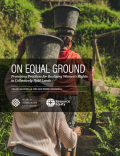
This report seeks to advance women’s tenure rights in collectively held lands by documenting promising practices and approaches gleaned from communities where women have recognized and secure rights. World Resources Institute (WRI) partnered with Resource Equity and organizations in five countries to identify and conduct case studies of five communities that have relatively gender-equitable land tenure systems.
SPREP_lit-review.PNG
Secretariat of the Pacific Regional Environment Programme (SPREP)
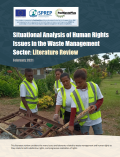
The human rights issues explored in this literature review are those that have been recognised by international bodies and the courts as being implicated by waste. These include substantive rights regarding exposure to waste such as right to life, health, safe and healthy work, among others detailed below. It also encompasses human rights to information and participation.
cover image
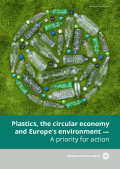
This report introduces the wide family of plastics and briefly explores the main challenges involved in transitioning towards a circular plastics economy.
TO
Online
Organisation :
Ellen MacArthur Foundation
Do you want to learn more about the circular economy? The Ellen MacArthur Foundation is running an interactive online learning programme from 17th March to 30th April — Inside the Circular Economy: Beyond the Basics.
COVID-19 and animals Information on risk mitigation measures for livestock and agricultural professionals_FAO.JPG
Food and Agriculture Organization of the United Nations (FAO)
This document is designed to provide information for communications with livestock professionals (including farmers, producers, veterinarians, paraveterinarians, community animal health workers).
How to feed the world in times of pandemics and climate change_FAO..JPG
Food and Agriculture Organization of the United Nations (FAO)
In this brief, four questions are addressed from the perspective of livestock systems: (1) How can food systems emerge strengthened from the COVID-19 pandemic? (2) How can the agricultural sector contribute to preventing further pandemics? (3) How can food systems become more climate-resilient? and (4) How can food systems contribute to climate change mitigation better than before?
Urban Climate Finance in the Wake of COVID-19_CCFLA.JPG
This brief examines the COVID-19 recovery assistance for cities from key funders - national governments, Development Finance Institutions (DFIs), and the private sector and introduces the key trends that have been found.
FAO_Covid-aquaculture-fisheries.PNG
Food and Agriculture Organization of the United Nations (FAO)
The purpose of this information paper is to update information on the impact of the COVID-19 pandemic on the fisheries and aquaculture sector. The paper looks at the measures taken to inform on the ongoing impact on the fisheries and aquaculture food systems, and responses from aquatic food providers and governments to counteract the negative impacts on aquatic food value chains