Browse Knowledge

Sort by
Rising-Tide-Mapping-Ocean-Finance-for-a-New-Decade.png
United Nations Environment Finance Initiative (UNEP FI)

The Rising Tide report maps the current state of ocean finance revealing trends in lending, underwriting and investment activities which impact the ocean. It reveals the frameworks and financial instruments that are successfully addressing ocean sustainability and highlights new opportunities and gaps in the market. It looks across five major ocean-linked sectors chosen for their established connection with private finance: seafood, ports, maritime transport, coastal and marine tourism and marine renewable energy.

This forward-thinking report builds on the United Nations’ Sustainable Blue Economy Finance Principles.

A world-first, the United Nations’ Sustainable Blue Economy Finance Principles remain a keystone in the market, designed for financiers to align their activities with Sustainable Development Goal 14, ‘life below water’. By following these Principles, and building sustainable blue practices into their decision-making processes, the financial sector has a unique opportunity and a clear imperative to steer the ocean economy towards sustainability.
 

World Business Council for Sustainable Development (WBCSD)
The objective of the Vital Supply Chains issue brief is to guide companies through the disruptions and systemic risks arising from COVID-19.
Organisation :
World Bank Group (WBG)

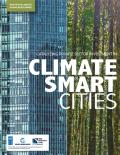
The objective of this report is to explore innovative financing instruments and approaches for catalyzing private sector financing to fill the climate-smart investment gap in cities.

circular-transition-indicator.png
World Business Council for Sustainable Development (WBCSD)
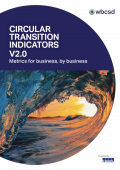
Built by business, for business, CTI provides companies with a common language to use for internal decision-making and communicating to key stakeholders.
Organisation :
World Economic Forum (WEF)
This report outlines why we need more circular trailblazers, how to spot them and what makes them successful at achieving impact on the circular economy beyond their lockstep growth.
How C40 cities are implementing zero emission areas_C40 Knowledge Hub.JPG
C40 Knowledge Hub
This report analyses the approaches being taken by some leading cities to implement a zero emission area (ZEA).
Deutsche Gesellschaft für Internationale Zusammenarbeit (GIZ) GmbH
This brief reviews and analyses 13 different Green Recovery “tracking” tools. It explains how these tools work, what their limitations are, and elaborates on how they can contribute to efforts towards building a climate-neutral, environmentally sustainable, and socially just world.
Photo by chaewon-lee-pBZSS6PIo44-unsplash.jpg
C40 Knowledge Hub
This Urban Cooling Toolbox provides a collection options to lower urban temperatures and reduce the impact of the urban heat island effect, to inform cities’ actions to adapt to extreme heat as part of climate action planning.
Hitting-Home-The-Compounding-Costs-of-Climate-Inaction.png
Organisation :
Climate Council
Hitting Home: The Compounding Costs of Climate Inaction outlines the latest science on how climate change is driving more destructive heatwaves, downpours, cyclones, droughts, fires and other extreme weather events.
WEF_Consulation.PNG
World Economic Forum (WEF)
This report by the World Economic Forum and McKinsey explores the opportunities and challenges involved in natural climate solutions. It provides clear and detailed guidance on the role policymakers and businesses can play in curbing climate change.