
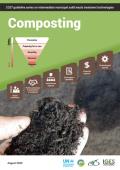
The guideline aims to assist decision-makers and policy-makers at the local level, who have limited or no technical background on composting, to evaluate the feasibility of introducing composting projects as an appropriate strategic option for improving waste management.
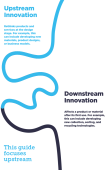
This guide discusses how to harness the power of upstream innovation as a root-cause solution to plastic waste while generating economic benefits.
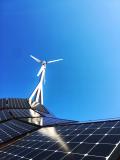
The Energy Policy Tracker is a database, which is updated on a weekly basis, to provide the latest information about COVID-19 government policy responses from a climate and energy perspective. The analysis provides a detailed overview of the public finance flows as determined by recovery packages across the G20.
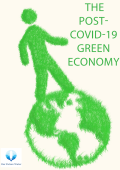
This paper discusses a variety of fiscal and non-fiscal policy tools, along with case studies, that are available to facilitate the transition to a green economy in the post-COVID-19 reconstruction phase.
The paper, The circular economy: a transformative COVID-19 recovery strategy demonstrates how policymakers can pave the way towards such a future.
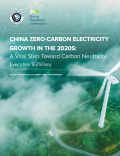
China Zero-Carbon Electricity Growth in the 2020s takes a look at the economic and technical issues involved with China’s coming transition to zero-carbon electricity.
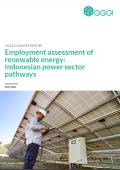
This study aims to assess the employment creation potential of RE technologies based on future power sector scenarios for three GGGI Member countries: Mexico, Indonesia, and Rwanda. This report presents the results for Indonesia only.
The publication provides an overview of financing opportunities for developing Asia—including instruments and mechanisms—as well as country case studies and practical tips for governments to implement enhanced disaster risk reduction.
This brief utilises econometric analysis to illustrate how the implementation of the SDGs is a statistically significant variable in a country’s improved performance in the Ease of Doing Business Index which, in turn, can aid in building back better as the world enters the second year of the pandemic.
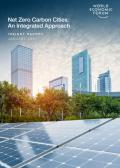
This report provides a global framework and recommends an integrated energy approach, defined as “systemic efficiency”, as a solution to the current environmental, economic, health, and social crises.