
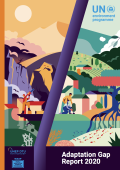
The UNEP Adaptation Gap Report 2020 finds that while nations have advanced in planning, huge gaps remain in finance for developing countries and bringing adaptation projects to the stage where they bring real protection against climate impacts such as droughts, floods, and sea-level rise.
To electrify ridehailing vehicles at scale, key industry stakeholders must collaborate. Analyzing 100 million miles of actual electric and gasoline ridehailing vehicle data, this report offers actionable recommendations for stakeholders to address three key barriers to implementation. Rocky Mountain Institute collaborated with General Motors to better understand the challenges and opportunities of transportation network company (TNC) electrification by evaluating a year of actual operational data—of both EVs and internal combustion engine (ICE) vehicles operating in TNC services.
The landscape of business has been radically transformed. Discussions about business action on sustainability are now taking place against a COVID-shaped backdrop of geopolitical and economic shifts, growing – and increasingly visible – inequality, heightened awareness of systemic flaws and human vulnerability, and societal fractures and polarisation. In addition, many businesses are operating in regions with high levels of government, corporate and private debt and growing levels of unemployment. CISL invited close friends, Senior Associates and Fellows to a series of conversations to explore the implications of these challenges and transformations for business action on sustainability. This report provides an overview of the key insights that emerged from these discussions.
This document presents the results of the Science Based Targets initiative’s chemicals sector scoping project with considerations for further target-setting method development. To summarize existing resources and support further work, the document provides an overview of current chemical company science-based targets, a proposed sector boundary for company activities, results of a stakeholder survey, and considerations for further research.
Tourism increasingly plays a central role in Uganda’s economy, while featuring strongly in COVID-19 recovery responses. The tourism sector offers opportunities to generate income and jobs while protecting Uganda’s vast wildlife and biodiversity, and strengthening cultural heritage.
Recovery from the COVID-19 crisis presents an important and unique opportunity for the EU to accelerate its transition towards a climate-neutral and circular economy.
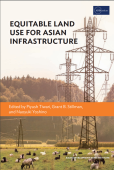
The aim of this book is to set forth debate on alternative practices for land use management in urban development and public infrastructure projects in Asia.
This update report reviews the Global Landscape of Climate Finance 2019, updating the data on climate finance flows for the years 2017 and 2018. It further offers a preliminary estimate for finance in 2019, drawing on data published in 2020
This report provides a first-of-its-kind empirical assessment of investment in infrastructure by institutional investors domiciled in OECD and G20 countries, presenting a snapshot from February 2020.