
This report identifies some of these barriers, and specifically those originating from the policies in place that determine the context in which companies operate. It helps policymakers better understand the benefits of eco-innovation and the contribution it can make towards sustainable development and national objectives.
This roadmap aims to describe, when possible, the main overarching goals, steps and agenda that the Building sector as a whole could share, creating the framework of a common vision for low GHG and resilient global real estate pathways.

This guide is for companies and organisations seeking to understand carbon offsets and how to use them in voluntary GHG reduction strategies. It may also be useful for individuals interested in using carbon offsets to compensate for their personal emissions. It explains how to use carbon offsets responsibly to accelerate action on climate change.
This guide is designed to address the urgent need for further extending the scope and ambition of building sector actions in NDCs, the opportunities for aligning with commitments made by non-party actors, and the renewed support for successively increasing ambition and implementing actions of NDCs. It provides a simple process for incorporating or updating ambitious and effective building sector actions in Nationally Determined Contributions.

The Resource Guide for Green Economy Learning Institutions aims to raise the visibility to green economy learning opportunities, enable collaboration and kick-start a global green economy learning network. It identifies knowledge-sharers, thought-leaders, and pioneers of green economy learning.

This training manual is intended to introduce the concept of indicators and illustrate the use of methodologies for selecting and applying indicators. It seeks to contribute to the capacity of countries choosing indicators for inclusive green economy, relevant to their country contexts, particularly in light of the pursuit of the Sustainable Development Goals.

In this podcast, Marco Schletz discusses how blockchain and tokenised securities could revolutionise green finance and inclusive development in Asia.
SHERPA (Screening for High Emission Reduction Potential on Air) is a Java/Python tool, which allows for a rapid exploration of potential air quality improvements resulting from national/regional/local emission reduction measures.
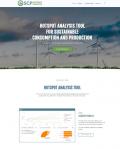
This tool provides three modules to analyse hotspot areas of sustainable consumption and production. For guidance how to use each module check out the auxiliary text boxes.
The organizations Environmental Finance, Finance for Tomorrow, Global Landscapes Forum, Mirova and IDH – The Sustainable Trade Initiative organized three events in November 2019 dedicated to exploring ways of investing in natural capital. These events aimed to create common ground and understanding about natural capital investments, help build a track record for investors, and foster partnerships among stakeholders. This Outlook 2020 builds on that experience, in order to share recommendations for actions to enable systemic change in a joint outcome.