
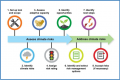
USAID has developed tools to support climate risk screening and management in strategy, project and activity design. These tools are meant to improve the effectiveness and sustainability of development interventions by helping the user to assess and address climate risk.
Tuvalu's Department of Waste Management is working to implement several initiatives to improve solid and hazardous waste management and reduce risks to the island nation's people and environment.
This report identifies action areas for advancing green fiscal policies, as part of COVID-19 recovery and beyond.

This paper offers recommendations for pathways for a more inclusive, environmentally sustainable and resilient COVID-19 recovery, as well as basic guidance to UN Resident Coordinators, Country Teams and other partners working on recovery plans and assessments of the socio-economic impacts of the pandemic
This working paper is an initial assessment of the potential impact of plastics used in agriculture. It focuses primarily on identifying sources of plastics and examining the fate of plastic residue in agricultural soil.
This case study shows how Doumé, Cameroon is tackling climate change by increasing sustainable access to water and electricity.
This publication discusses how carbon pricing instruments can be designed to help achieve net-zero greenhouse gas (GHG) emission targets while enabling economic recovery from the coronavirus disease (COVID-19) pandemic.
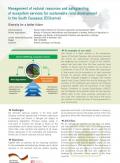
The ECOserve programme is developing strategies to promote the sustainable use of natural resources, biodiversity conservation and climate protection, and to improve the energy situation in Armenia, Azerbaijan and Georgia.
The Circular Transition Indicators framework introduced in this paper allows businesses to determine circularity on a product, business unit, site or company level.
This report shows how Laos can become net-carbon neutral by 2050 by adopting a circular economy approach.