
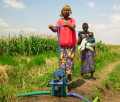
This policy brief draws on the findings from the report and makes an economic case for investing in ENRs to reduce poverty within the context of what is generally known as the ‘poverty-environment nexus.’
This report focuses on filling the knowledge gap on how decent work will be affected by nature-based Solutions when transitioning to a green economy.
The purpose of this guidance manual is to support African government officials and development partners to integrate pro-poor environment, natural resource, and climate sustainability into national and sub-national public sector budgeting and public finance management systems.
This policy brief focuses on the role of national governments in enabling and scaling finance for urban adaptation.
This guide provides key findings and policy recommendations in the areas of mainstreaming and measuring biodiversity, aligning budgetary and fiscal policy with biodiversity, embedding biodiversity in the financial sector, and improving biodiversity outcomes linked to international trade.
These regional guidelines seek to help make the business case for the circular economy in Africa and establish a common and suitable enabling environment across the continent by promoting regional coherence and collaboration.
This book examines the Asian Development Bank Institute since its accession in 1997 and its efforts to provide the region's governments and stakeholders with policy knowledge.

This tool helps to connect climate-smart small businesses in developing countries with international buyers.
This report analyses the state of blended finance in developing countries with a focus on climate action. It provides a thorough market overview for private investors to mobilize private capital towards climate funding gaps.

The UN ActNow campaign engages the general public to take meaningful action against climate change and foster change on an individual level. It offers various opportunities to take part in challenges and provides concrete action ideas.