
TO

On 12-14 May, the Global Landscapes Forum is hosting Kyoto 2019 Digital Edition. The 24-hour broadcast pulls together interactive webinars from all over the world, as well as the live broadcast of GLF Kyoto 2019.

On 13 May 2019 (7:45 am - 5:30 pm GMT+9), Global Landscapes Forum (GLF) is hosting GLF Kyoto 2019 in Kyoto, Japan.
TO
On 20-21 May 2019, UN Environment and the International Union for Conservation of Nature (IUCN) are hosting the First Expert Working Group Meeting on Sustainable Infrastructure in Gland, Switzerland.
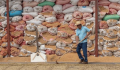
On 2 May 2019 (10:00 - 11:00 AM EDT), the World Resources Institute (WRI) and the NDC Partnership is hosting the COP25 Preview: A Conversation with Climate Action Champion Gonzalo Muñoz Abogabir in Washington DC, United States. The event will be live-streamed on event Facebook page.

On 10 May 2019 (12:00 - 17:00 BST), UN Environment Programme Finance Initiative (UNEP FI) is hosting UNEP FI TCFD Investor Pilot Report Launch in London, UK.
TO
The Seventh Green Growth Knowledge Platform Annual Conference (GGKP7) will be held on 22 October 2019 in Seoul, Republic of Korea, on the theme of “Achieving Global Green Energy Transformation”. It will take place in the context of Global Green Growth Week 2019: Unlocking Renewable Energy Potential (21-25 October 2019) and in conjunction with the 2019 International Renewable Energy Conference hosted by the Government of Korea (KIREC) (23-25 October 2019).
TO
On 21-25 October 2019, the Global Green Growth Institute (GGGI) is holding Global Green Growth Week 2019 (GGGWeek2019) on the theme of "Unlocking Renewable Energy Potential", in Seoul, Republic of Korea. GGGIWeek2019 will be held alongside the Korea International Renewable Energy Conference (KIREC) – organized by REN21 and the Korea Energy Agency – and will include a number of events and sessions, including the 7th Green Growth Knowledge Platform (GGKP) Annual Conference and launch of GGGI’s State of Green Growth Report and Green Growth Index.
TO
The 30th Pacific Islands Environment Conference (PIEC) will be held on 23-28 June 2019 in Guam, Tumon, on the theme of “Greening Growth in the Pacific.”
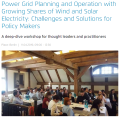
On 11 April 2019 (09:00-12:30pm CET), Agora Energiewende is hosting a deep-dive workshop for thought leaders and practitioners in Berlin, Germany
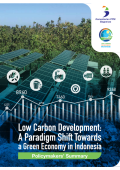
This policymakers' summary of the report, Low Carbon Development Report: A paradigm shift towards a green economy in Indonesia, identifies development policies that maintain economic growth, alleviate poverty, and help meet sector-level development targets, while simultaneously helping Indonesia achieve its climate objectives, and preserve and improve the country’s natural resources.