

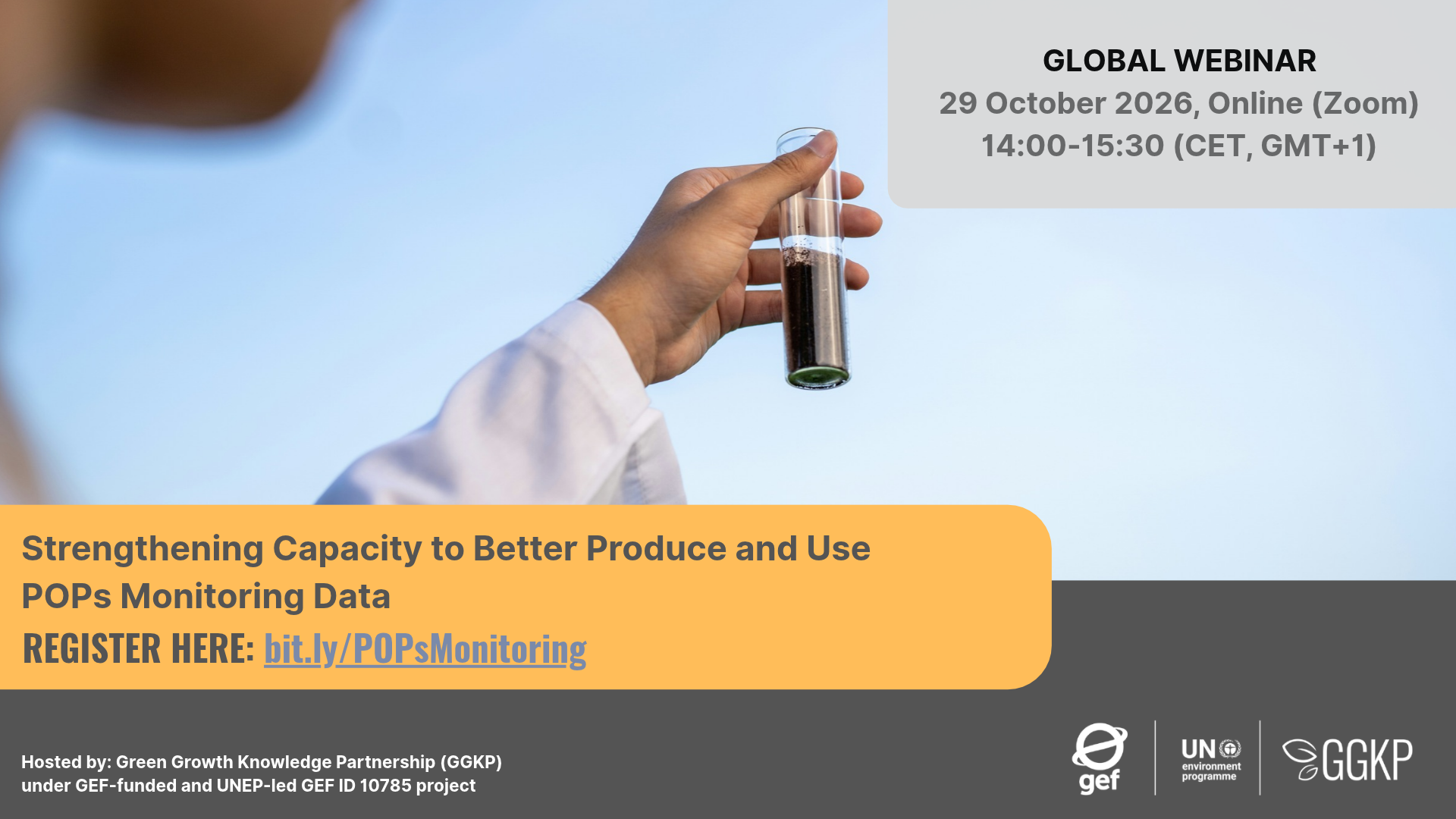
Strengthening Capacity to Better Produce and Use POPs Monitoring Data
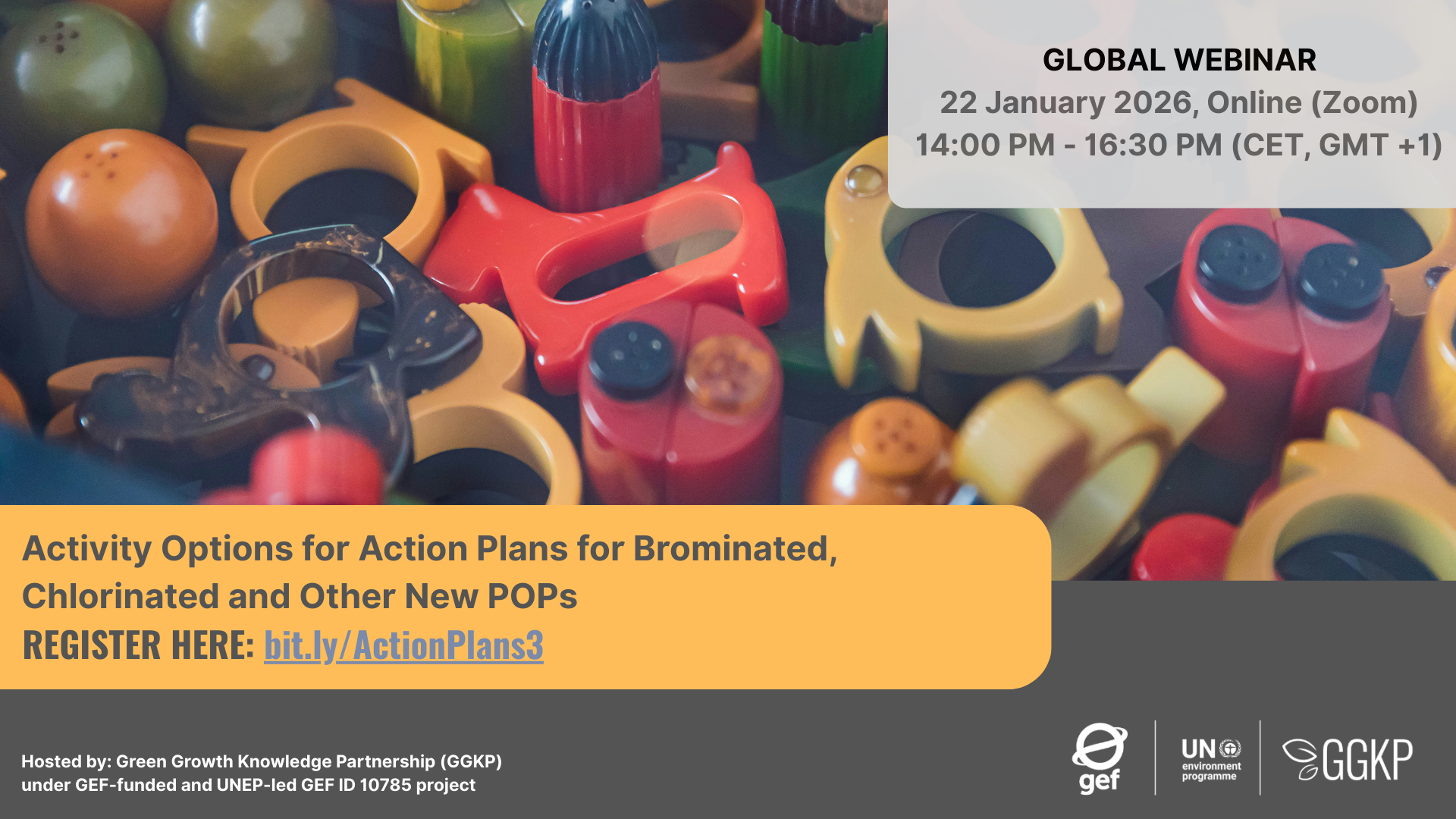
On 29 October 2026 (14:00-15:30 CET), the Green Growth Knowledge Partnership (GGKP) and UNEP's Chemicals Science and Policy Unit (CSPU) will host a virtual webinar on Strengthening Capacity to Better Produce and Use POPs Monitoring Data.
The webinar will present findings from a questionnaire assessing countries’ capacities, data availability, and priority needs for monitoring persistent organic pollutants (POPs), and explore practical solutions to strengthen monitoring systems and use data to inform the development and updating of National Implementation Plans (NIPs) under the Stockholm Convention.

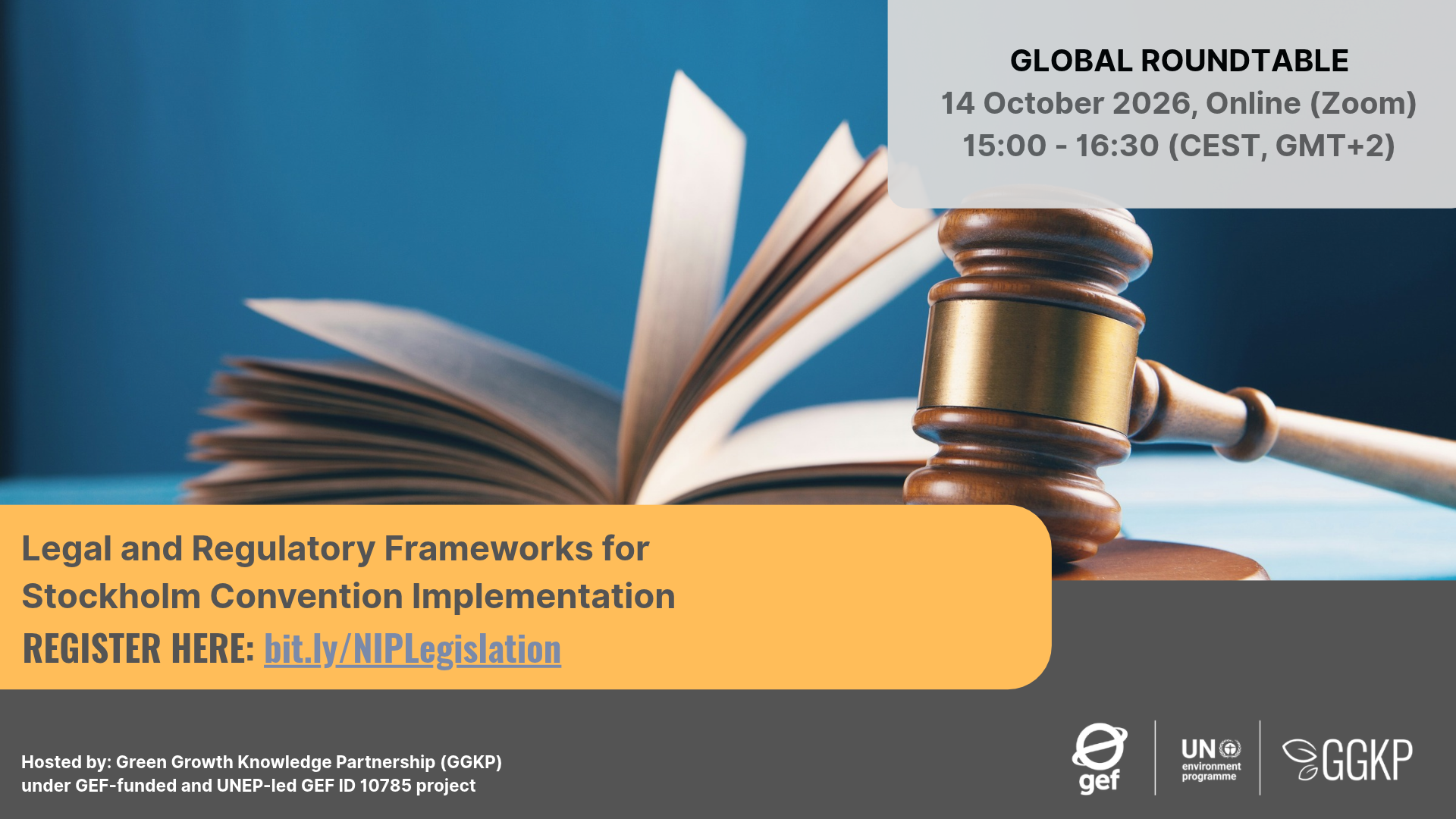
Legal and Regulatory Frameworks for Stockholm Convention Implementation
On 14 October 2026 (15:00-16:30 CEST), the Green Growth Knowledge Partnership (GGKP), as part of the GEF-funded and UNEP-led Global NIP Update Projects, will host a roundtable on Legal and Regulatory Frameworks for Stockholm Convention Implementation.
The roundtable will explore legislative and regulatory approaches to POPs management. The BRS Secretariat will review the Convention’s legal requirements, while the European Commission will present the EU approach, including the REACH and POPs Regulations. Project country representatives will share experiences in developing, updating and enforcing national legislation.

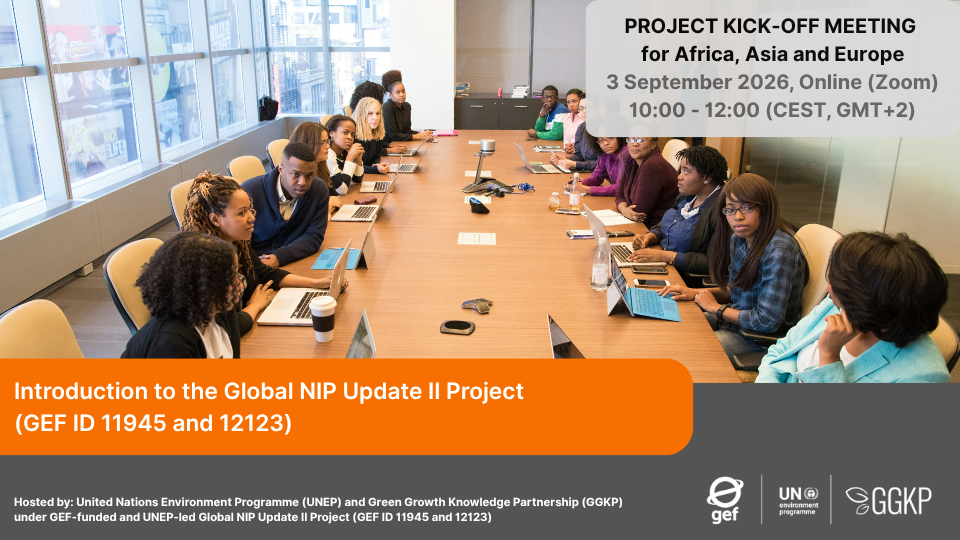
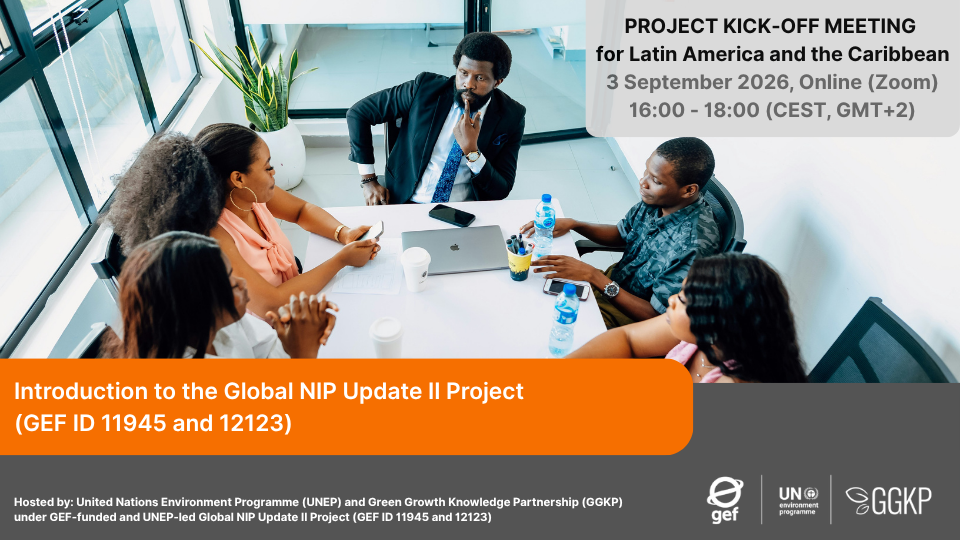
Kick-off Meeting for Africa, Asia and Europe: Introduction to the Global NIP Update II Project (GEF ID 11945 and 12123)
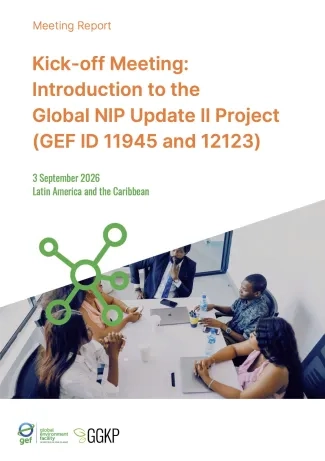
On 3 September 2026 (10:00-12:00 CEST), the Green Growth Knowledge Partnership (GGKP) and the United Nations Environment Programme (UNEP) will host the kick-off meeting of the GEF-funded, UNEP-led GEF 11945 and GEF 12123 project “Global Development, Review and Update of National Implementation Plans (NIPs) under the Stockholm Convention (SC) on Persistent Organic Pollutants (POPs)” for project countries in Africa, Asia and Europe.
The meeting will introduce participating countries to the project, its components and objectives, while presenting the activities that will follow during implementation. Participants will be introduced to the executing agencies, knowledge products and tools developed under the existing Global NIP Update project (GEF 10785), the project knowledge-sharing platform and the Green Forum NIP Update Community of Practice.
Browse latest webinars and events
Green Growth Knowledge Partnership (GGKP)
Green Growth Knowledge Partnership (GGKP)
Browse latest knowledge
Research
Green Growth Knowledge Partnership (GGKP)
Guidance
United Nations Environment Programme (UNEP)
Guidance
United Nations Environment Programme (UNEP)
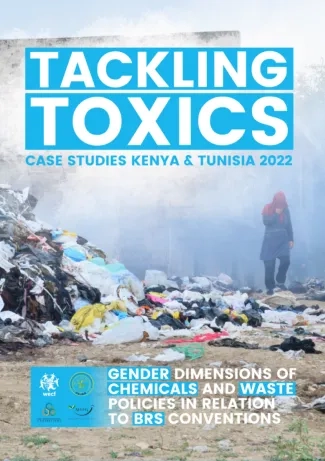
Case Studies
Basel Rotterdam and Stockholm Conventions (BRS)

Courses
United Nations Institute for Training and Research (UNITAR)
Tools
Green Growth Knowledge Partnership (GGKP)
Research
Green Growth Knowledge Partnership (GGKP)
Guidance
United Nations Environment Programme (UNEP)
Explore more and engage
| Title | Image | Description | |
|---|---|---|---|
|
Join us on Green Forum
|
Image
|
Join the NIP Update CommunityThe Green Forum is the home of NIP Update Community of Practice on key challenges countries are facing in the process of development, review and update of their National Implementation Plans (NIPs). We host and moderate groups and promote open dialogue for NIP update capacity building. Register now, create your profile, introduce yourself and join the group discussions. Group members are invited to ask questions to other members in the group, share knowledge through answering questions from members in the group, share experiences and knowledge. |
|
|
Learn more about Stockholm Convention
|
Image
|
The Stockholm Convention on Persistent Organic Pollutants is a multilateral environmental agreement dedicated to protecting human health and the environment from harmful chemicals that persist in the environment, accumulate in living organisms, and pose serious risks. The Convention’s website serves as a comprehensive hub for information on POPs, including details on initial and newly identified POPs, reports and decisions, and a wealth of resources such as brochures, fact sheets, guidance manuals, and other key publications. Explore it for indispensable tools and insights to support the effective implementation of the Convention. |
